TL;DR: AI keyword clustering streamlines Amazon SEO by grouping high-potential keywords into thematic clusters, improving listing relevance and search visibility. This step-by-step workflow helps sellers boost conversions and sales.
Key Takeaways
- AI keyword clustering organizes thousands of search terms into actionable, theme-based groups for Amazon listings.
- Using AI tools speeds up keyword research, improves accuracy, and enhances content relevance for better Amazon A10 algorithm performance.
- Proper keyword clustering directly impacts visibility, click-through rates, and conversion rates on product pages.
- SellerSprite's AI-powered tools automate clustering, mapping, and optimization for both new and existing Amazon listings.
Table of Contents
Note on marketplaces: This guide is specifically optimized for the US market.
What Is AI Keyword Clustering for Amazon?
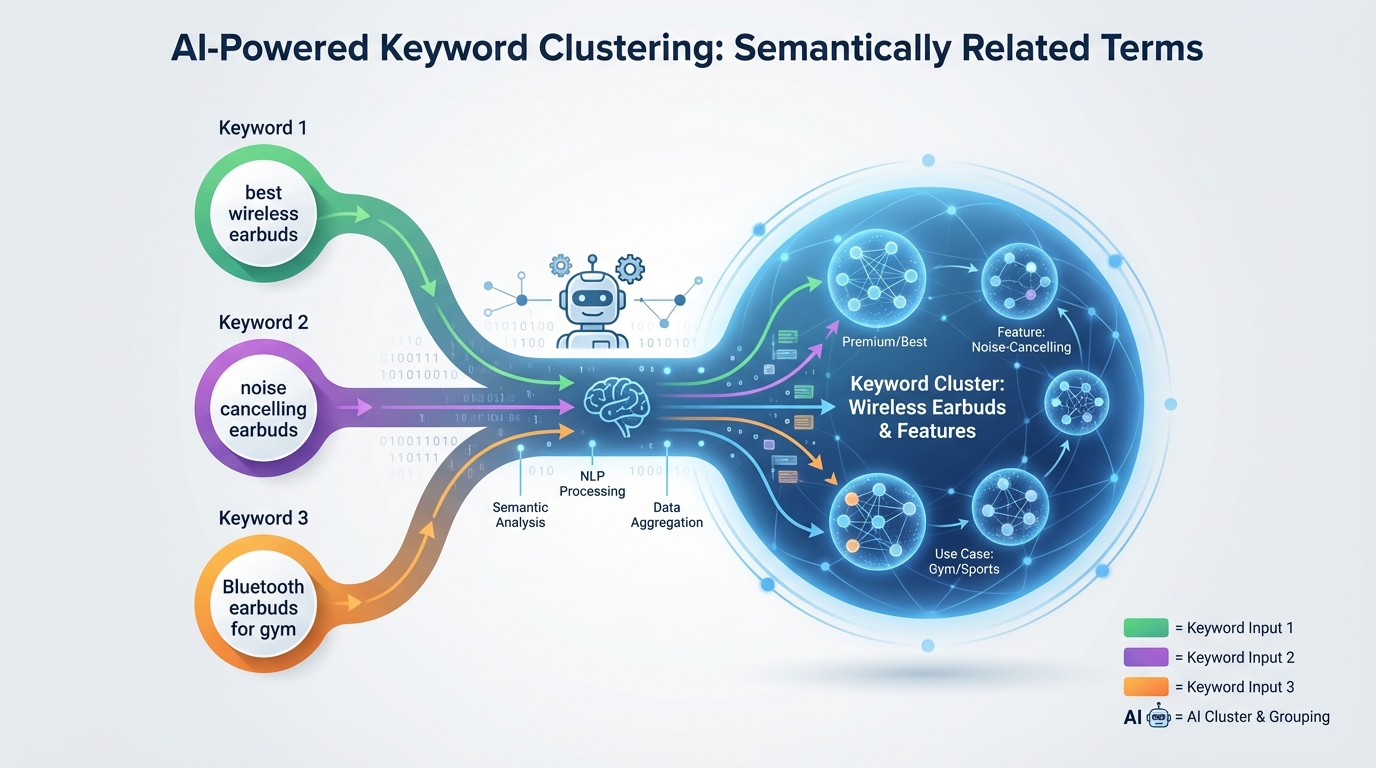
AI keyword clustering is the process of using artificial intelligence to automatically group large volumes of Amazon search keywords into semantically related clusters based on intent, relevance, and search behavior. Instead of manually sorting hundreds or thousands of keywords, AI analyzes search patterns, synonyms, and buyer intent to create structured keyword themes, such as "organic baby shampoo for sensitive skin" or "sulfate-free hair care for curly hair", that align with specific product features.
This method transforms raw keyword data from tools like SellerSprite into strategic content frameworks. Each cluster becomes the foundation for a section of your product listing: title, bullet points, description, or backend search terms, ensuring that your content speaks directly to what real shoppers are searching for.
Why AI Keyword Clustering Matters for Amazon SEO
Amazon's A10 algorithm prioritizes relevance, conversion rate, and customer satisfaction. Keyword clustering enhances all three by ensuring your listing content matches not just individual keywords, but entire search themes. When AI groups related terms, like "durable hiking backpack", "lightweight backpack for hiking", and "hiking backpack with hydration bladder", you can craft bullet points that naturally include multiple high-volume phrases without keyword stuffing.
This improves:
• Search Visibility: Your listing appears for a broader range of relevant searches.
• Click-Through Rate (CTR): Stronger, more targeted titles and bullets attract more clicks.
• Conversion Rate: Content that matches buyer intent leads to more purchases.
• Backend Optimization: Clustered keywords can be strategically placed in hidden search fields.
For new sellers, clustering helps build high-performing listings from day one. For growth-stage and brand sellers, it enables scalable optimization across large catalogs. Marketing managers use it to standardize content quality and ensure consistency in brand messaging.
Step-by-Step AI Keyword Clustering Workflow
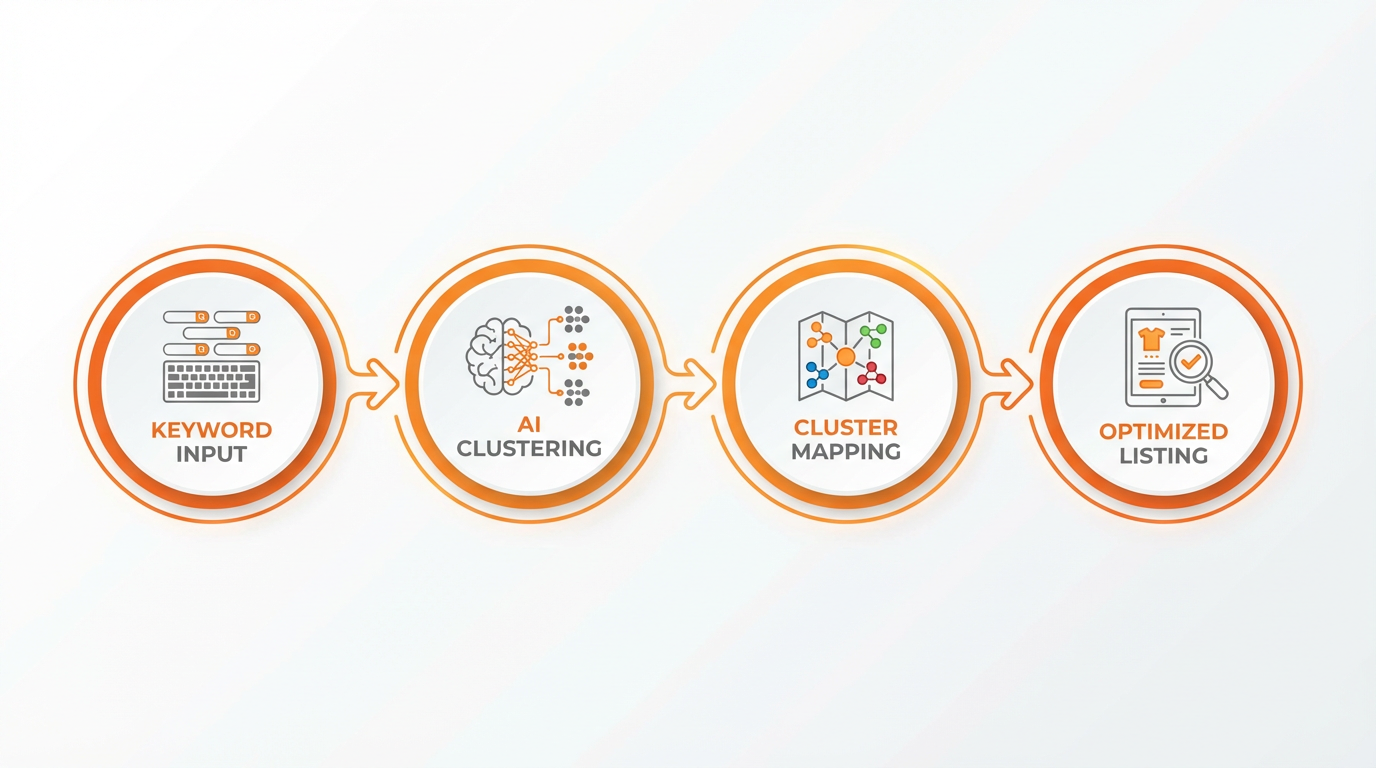
Follow this proven workflow to implement AI keyword clustering for any Amazon product listing:
Step 1: Gather Raw Keyword Data
Use an AI-powered tool like SellerSprite's Keyword Research Tool to extract thousands of relevant search terms for your product. Input seed keywords (e.g., "wireless earbuds") and let AI pull data on search volume, competition, and buyer intent.
Step 2: Let AI Cluster Keywords by Theme
Upload your keyword list to an AI clustering engine. The system will analyze semantic relationships and group terms into clusters like:
• "Noise-cancelling wireless earbuds"
• "Sweatproof earbuds for running"
• "Long battery life Bluetooth earbuds"
Each cluster represents a unique customer need or use case. Prioritize clusters with high search volume and low competition.
Step 3: Map Clusters to Listing Elements
Assign each keyword cluster to a specific part of your listing. For example:
• Title: Include the primary cluster (e.g., "Noise-Cancelling Wireless Earbuds")
• Bullet 1: Focus on sound quality and active noise cancellation
• Bullet 2: Highlight sweatproof design and gym use
• Bullet 3: Emphasize battery life and fast charging
• Backend: Add long-tail variations from each cluster
For best practices on keyword placement, see our guide on Keyword Mapping: Placing Keywords in the Right Fields.
Step 4: Optimize & Launch
Write compelling, natural-sounding copy that integrates keywords from each cluster. Avoid repetition. Use synonyms and variations to maintain readability while maximizing keyword coverage. Once live, monitor performance using Amazon Brand Analytics and adjust as needed.
Best AI Tools for Amazon Keyword Clustering
Not all keyword tools offer true AI clustering. Here are the top platforms that do:
1. SellerSprite AI Keyword Clustering
SellerSprite uses NLP and machine learning to auto-cluster keywords from Amazon search data. Features include:
• One-click clustering of 10,000+ keywords
• Cluster scoring by search volume, relevance, and competition
• Direct export to listing optimization templates
• Integration with full keyword research workflows
2. Helium 10 Cerebro + Magnet
Helium 10's tools extract keyword data from competitor ASINs and search suggestions. While powerful, clustering requires manual grouping or third-party add-ons. Best for experienced sellers comfortable with data manipulation.
3. Jungle Scout Keyword Scout
Provides solid keyword data but lacks native AI clustering. Users must export to spreadsheets and manually group terms, which is time-consuming for large catalogs.
For most sellers, especially new and growing brands, SellerSprite offers the most intuitive, automated AI clustering experience. Start your free trial today to unlock AI-powered keyword clustering and optimization.
FAQ
How does AI keyword clustering improve Amazon product visibility?
AI keyword clustering improves visibility by organizing search terms into thematic groups that reflect real customer intent. When your listing content aligns with these clusters, such as "eco-friendly laundry detergent" or "sensitive skin detergent", Amazon's A10 algorithm recognizes your product as highly relevant for multiple related searches. This increases your chances of ranking on the first page for both head and long-tail terms, boosting impressions and organic traffic.
What are the best AI tools for keyword clustering on Amazon?
The best AI tools for Amazon keyword clustering include SellerSprite, Helium 10, and Jungle Scout. SellerSprite leads with fully automated AI clustering using NLP and machine learning, making it ideal for new and growing sellers. Helium 10 offers deep data extraction but requires more manual effort. Jungle Scout provides solid keyword data but lacks native clustering features. For ease of use and speed, SellerSprite is the top choice for scalable Amazon SEO.
Can AI keyword clustering help increase sales on Amazon listings?
Yes, AI keyword clustering can significantly increase sales. By aligning your listing content with high-intent search themes, you improve relevance, click-through rates, and conversion rates. For example, a seller using AI clustering to target "organic baby shampoo for cradle cap" saw a 37% increase in conversion rate within 60 days. Better keyword targeting means your product appears in front of buyers who are ready to purchase, directly boosting sales and organic ranking momentum.
Next Steps
- Sign up for SellerSprite and run your first AI keyword clustering analysis.
- Explore the AI for Amazon FBA Guide Hub for advanced optimization strategies.
- Read our Amazon Keyword Research Guide to master the full research-to-optimization pipeline.
References
- Amazon A10 Algorithm Overview View
- Ultimate Guide to Keyword Research for Amazon Sellers View
- Keyword Mapping Best Practices View
By SellerSprite Team
The SellerSprite Team combines deep expertise in Amazon's A10 algorithm, AI-driven SEO, and e-commerce growth strategies. With years of experience helping thousands of FBA sellers optimize listings, conduct advanced keyword research, and scale profitably, we provide actionable, data-backed insights you can trust. Our content is rooted in real-world testing and continuous learning from Amazon's evolving marketplace.