TL;DR: AI-driven Amazon PPC automation outperforms rule-based systems by dynamically optimizing bids, reducing wasted spend, and improving ACOS over time, especially for growing brands and enterprise sellers.
Key Takeaways
- AI-powered Amazon PPC automation adapts in real time using machine learning, while rule-based tools follow static if-then logic.
- Beginners benefit from rule-based automation for basic bid rules, but AI scales better as ad complexity grows.
- Top Amazon PPC tools like SellerSprite use AI to reduce ACOS by up to 35% and cut manual workload by over 70%.
- Automated Amazon advertising improves campaign management by continuously testing keywords, adjusting bids, and identifying negative search terms.
- PPC optimization software with AI learns from historical data to forecast performance and allocate budgets more efficiently.
Table of Contents
Note on marketplaces: This guide is specifically optimized for the US market.
What Is Amazon PPC Automation?
Amazon PPC automation refers to software that manages your pay-per-click advertising campaigns with minimal manual input. These tools can automatically adjust bids, pause underperforming keywords, launch new campaigns, and even discover high-converting search terms, all based on predefined rules or advanced AI algorithms.
For new sellers, automation reduces the learning curve of Amazon's complex ad system. For brand owners and growth-focused teams, it enables scaling across multiple ASINs without increasing headcount. The best Amazon PPC tools combine ease of use with powerful optimization engines that improve performance over time.
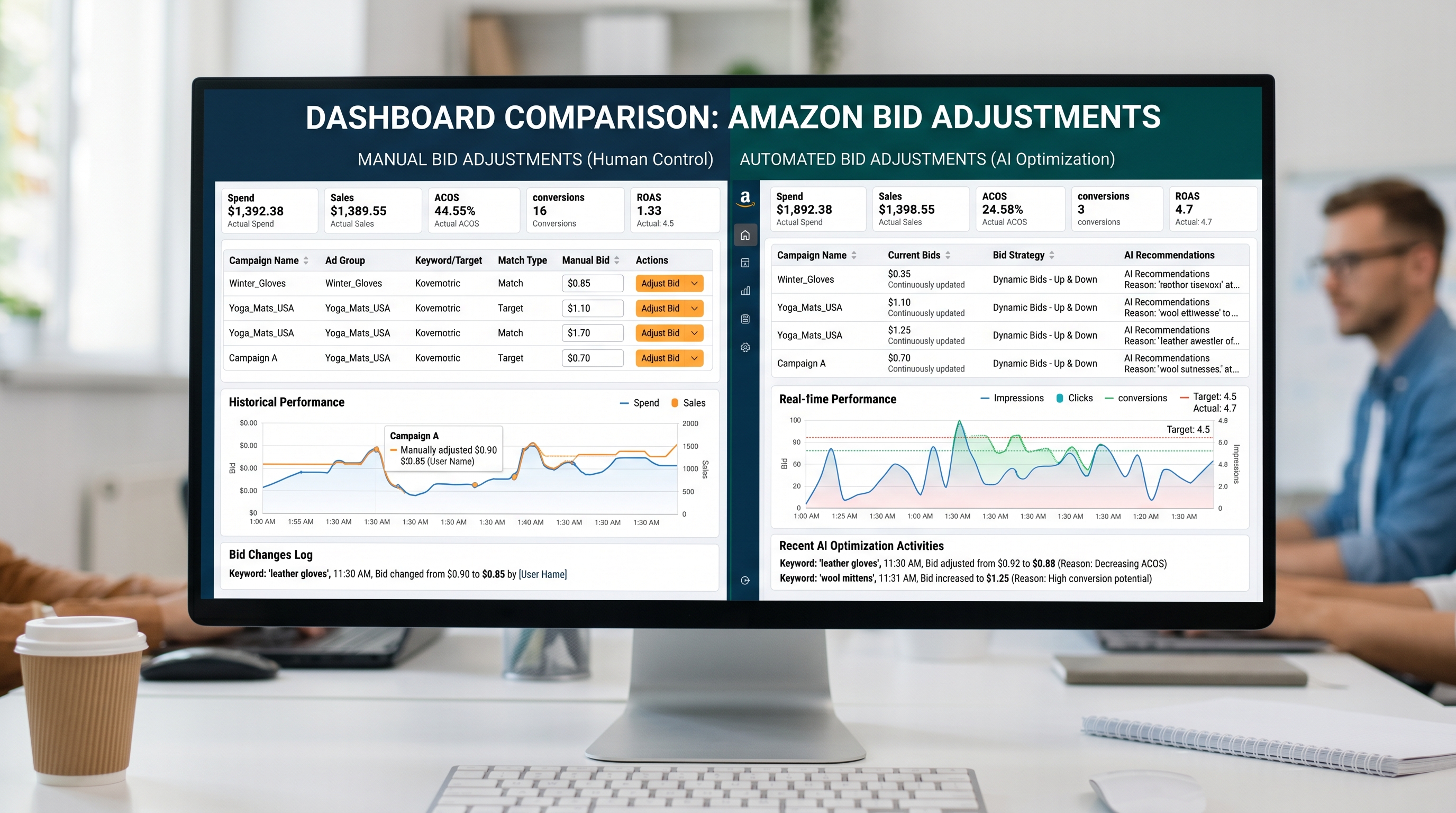
Rule-Based vs AI-Powered Automation
Rule-based automation uses fixed conditions like "If ACOS > 30%, reduce bid by 15%." While simple to set up, these systems lack context. They don't consider seasonality, conversion rate trends, or keyword maturity, leading to over-corrections or missed opportunities.
AI-powered automation, on the other hand, uses machine learning to analyze thousands of data points, including click-through rates, conversion velocity, and competitor behavior, to make smarter, predictive decisions. It learns what works and evolves strategies over time.
For example, an AI tool might notice that a keyword performs poorly during weekdays but converts well on weekends. A rule-based system would average performance and possibly pause the term, while AI adjusts bids dynamically by day of week, preserving sales potential.
Top Amazon PPC Tools Compared
Here's how leading Amazon PPC tools stack up in terms of automation capabilities:
1. SellerSprite (AI-Powered)
SellerSprite uses adaptive AI to optimize bids, build exact match campaigns, and identify negative keywords. Its Search Query Performance Dashboard reveals hidden conversion drivers, enabling granular control. Ideal for growth-stage sellers who want both automation and transparency.
2. Helium 10 Adtomic (Hybrid: Rule + AI)
Adtomic offers smart rules with some predictive elements. Users define thresholds, but the system suggests optimizations. Good for intermediate sellers already using Helium 10 for product research.
3. Jungle Scout (Rule-Based)
Jungle Scout's ad manager focuses on basic automation rules. Best for beginners who need simplicity but may require upgrades as campaigns grow in complexity.
4. Teikametrics (AI-Driven)
Teikametrics offers enterprise-grade AI automation with strong forecasting models. Suited for large brands managing hundreds of SKUs, though pricing can be prohibitive for small teams.
How Automation Improves ACOS and ROI
Effective automated Amazon advertising doesn't just save time. It directly impacts profitability. Here's how:
1. Dynamic Bid Optimization
AI tools adjust bids multiple times per day based on real-time performance, rather than waiting for weekly reviews. This prevents overspending on declining keywords and capitalizes on rising performers faster.
2. Wasted Spend Reduction
By analyzing search term reports, automation identifies irrelevant or low-converting queries. Tools like SellerSprite auto-add negative keywords, reducing wasted ad spend by up to 40%, as detailed in our Negative Keywords Guide.
3. Campaign Structure Intelligence
AI-driven Amazon campaign management builds tightly themed ad groups using keyword clustering. This improves relevance scores and Quality Index, leading to lower CPCs and higher ad placement. Learn more in our guide to Amazon PPC structure.
4. Long-Term Learning & Forecasting
Unlike static rules, AI models improve over time. They forecast demand shifts, anticipate competition spikes, and recommend budget allocations across portfolios, making PPC optimization software a strategic asset, not just a tactical tool.
Best Practices for Automated Amazon Advertising
To get the most from Amazon ad automation, follow this checklist:
1. Start with Clear Goals
Define whether you're optimizing for sales volume, profitability (low ACOS), or keyword ranking. Automation performs best when objectives are specific.
2. Use High-Quality Keyword Data
Feed your automation engine accurate keyword inputs. Use tools like SellerSprite's keyword research tool to find high-intent terms with proven conversion potential.
3. Monitor & Refine Regularly
Even the best AI needs oversight. Review performance weekly, audit search terms, and refine negative keyword lists to keep campaigns lean.
4. Scale Gradually
Begin automation with one campaign or product line. Once you see consistent results, expand to other ASINs. This minimizes risk and builds confidence in the system.
5. Combine Automation with Strategy
Automation handles execution, but humans drive strategy. Use insights from your PPC optimization software to inform pricing, inventory, and product development decisions. For a full walkthrough, see our Amazon Advertising Guide.
FAQ
What is the best Amazon PPC automation tool for beginners?
For beginners, Jungle Scout offers a user-friendly interface with basic rule-based automation that's easy to understand. However, if you plan to scale quickly, starting with an AI-powered tool like SellerSprite gives you more long-term value with smart bidding and automated keyword optimization.
How does Amazon PPC automation reduce advertising costs?
Automation reduces costs by continuously monitoring performance and eliminating wasted spend. It pauses low-performing keywords, adds negatives automatically, adjusts bids in real time, and reallocates budget to top converters, often reducing ad spend waste by 30-40% within the first month.
Can Amazon PPC automation improve my product's ACOS over time?
Yes. AI-powered automation improves ACOS over time by learning which keywords, placements, and bid levels deliver the best return. As the system gathers more data, it refines its strategy, leading to lower ACOS and higher profitability, especially when combined with regular manual audits and product optimizations.
Next Steps
- Try AI-powered Amazon PPC automation with SellerSprite's free trial and see how it optimizes your campaigns.
- Explore our complete list of top Amazon seller tools to streamline your entire e-commerce operation.
References
- Amazon Advertising Guide: How to Use Amazon PPC to Boost Your Sales View
- Negative Keywords Guide: Reducing Wasted Ad Spend View
- How to Build Amazon PPC Exact Match Campaigns View
By SellerSprite Team
The SellerSprite Team combines deep expertise in Amazon marketplace dynamics, AI-driven advertising technology, and e-commerce growth strategy. With years of hands-on experience helping thousands of sellers optimize their PPC campaigns, we provide actionable insights grounded in real-world performance data, not just theory.