Amazon changes fast. A product can go from unknown to one of the most bought items on Amazon in weeks, then cool off as competitors rush in. But the good news is this: patterns repeat. When you understand what drives Amazon top selling items and how shoppers search, you can spot high demand products on Amazon before the market feels crowded.
This guide covers two things:
- Examples of top selling items on Amazon and what makes them win (2026 context)
- A step-by-step Amazon product research workflow with SellerSprite to find high demand products to sell using real metrics
Key takeaways
- In 2026, the fastest way to find high demand products on Amazon is to combine (1) Amazon trend lists, (2) keyword demand, and (3) product-level competition metrics.
- Top selling items usually share repeatable demand drivers: clear problem-solving, low perceived risk price points, strong logistics fit, and keyword-friendly buying intent.
- Use a workflow, not a guess: Best Sellers and Movers and Shakers for ideas, then validate with keyword search volume, sales stability, review barriers, and market concentration.
- For Amazon FBA beginners, prioritize niches where demand is proven but review barriers and brand dominance are still manageable.
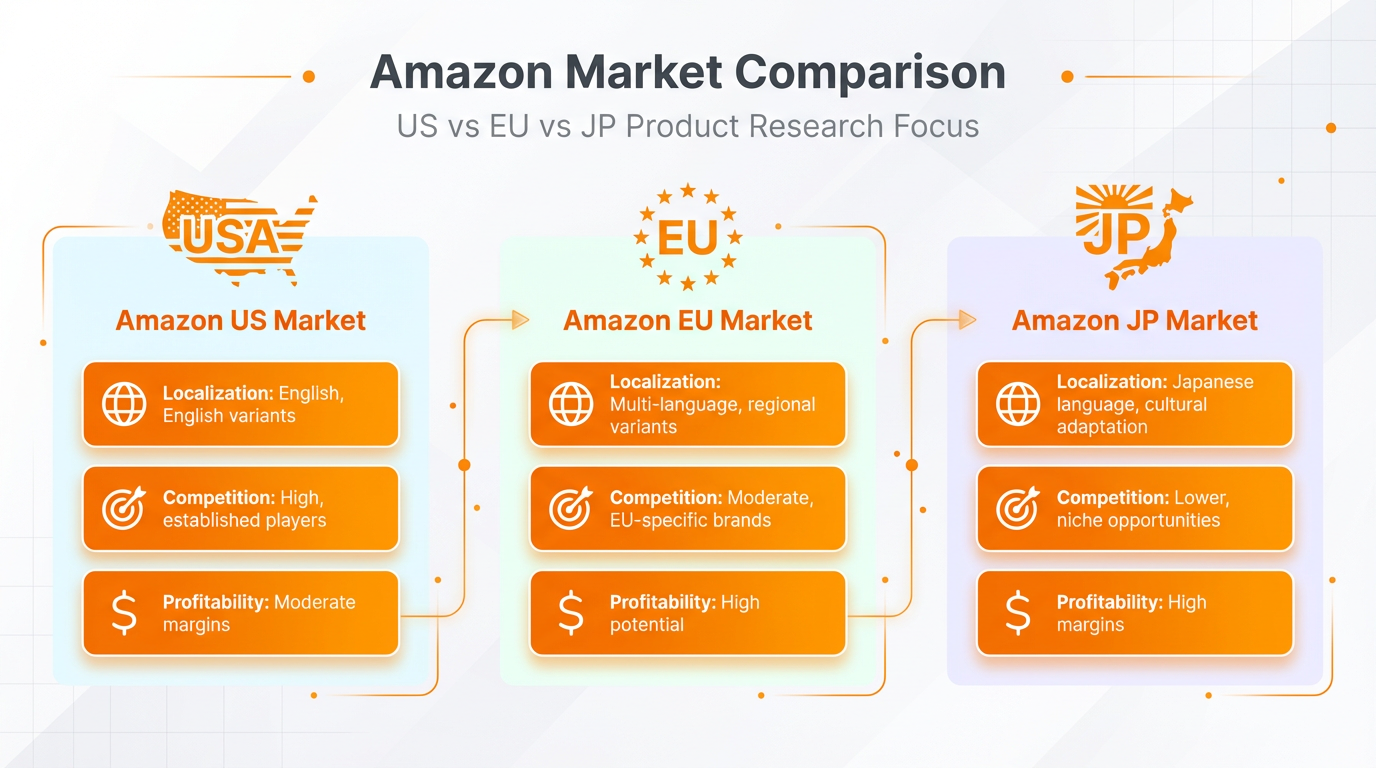
- Regional differences matter: research the marketplace you sell in (US vs EU vs JP) and validate demand and competition with the same rules.
- Turn research into action: shortlist, profit-check, then monitor pricing, BSR, and keyword movement so you can react before the niche gets crowded.
Pro tip: If you are on mobile, use your browser search to find a section title quickly.
Table of contents
- Introduction: Amazon's ever-changing bestsellers
- Top selling Amazon categories in 2026 and what wins
- How to find high demand products on Amazon FBA step by step
- Amazon product research workflow with SellerSprite (2026)
- SellerSprite product research tutorial: copyable filter presets
- How to spot high demand, low competition niches
- US vs EU vs JP: marketplace differences (GEO signals)
- Mini case studies: what the workflow looks like in practice
- FAQ
- References
- About the author
Introduction: Amazon's ever-changing bestsellers
Why knowing top sellers matters
Studying the top selling products on Amazon is not about copying what already exists. It is about learning what buyers consistently pay for, what problems they want solved, and what shopping behaviors create repeatable demand. When you understand why top sellers win clicks and conversions, you can make smarter decisions on product selection, positioning, bundling, and listing optimization.
2026 reality check: buyers are stricter, data matters more
Heading into 2026, opportunity is still huge, but the bar is higher. Shoppers compare faster, reviews matter more, and rising costs push sellers to profit-check earlier. That is why this guide is built around a repeatable workflow: find signals, validate demand, measure competition, then move.
Top selling Amazon categories in 2026 and what wins
Top selling items change constantly, but the best starting points are categories that repeatedly show strong demand and frequent product turnover. Use them as idea engines, then validate at the subcategory level where products are comparable.
What top selling items have in common
Even across different categories, the most sold items on Amazon often share the same demand drivers:
- A clear problem solved fast (save time, reduce clutter, improve comfort)
- Easy to understand in one glance (higher click-through rate and conversion)
- A low perceived-risk price point (buyers will "try" it)
- Strong logistics fit (smaller, lighter, less fragile often scale faster)
- Keyword-friendly demand (buyers search with clear, high-intent terms)
Try this with SellerSprite
Start by validating whether your category has enough demand and manageable review barriers. Open Product Research and filter by category, sales, revenue, and rating count.
How to find high demand products on Amazon FBA step by step
To find high demand products on Amazon in 2026, focus on data from best sellers, keyword trends, and competition metrics, then validate with product-level tools before you buy inventory.
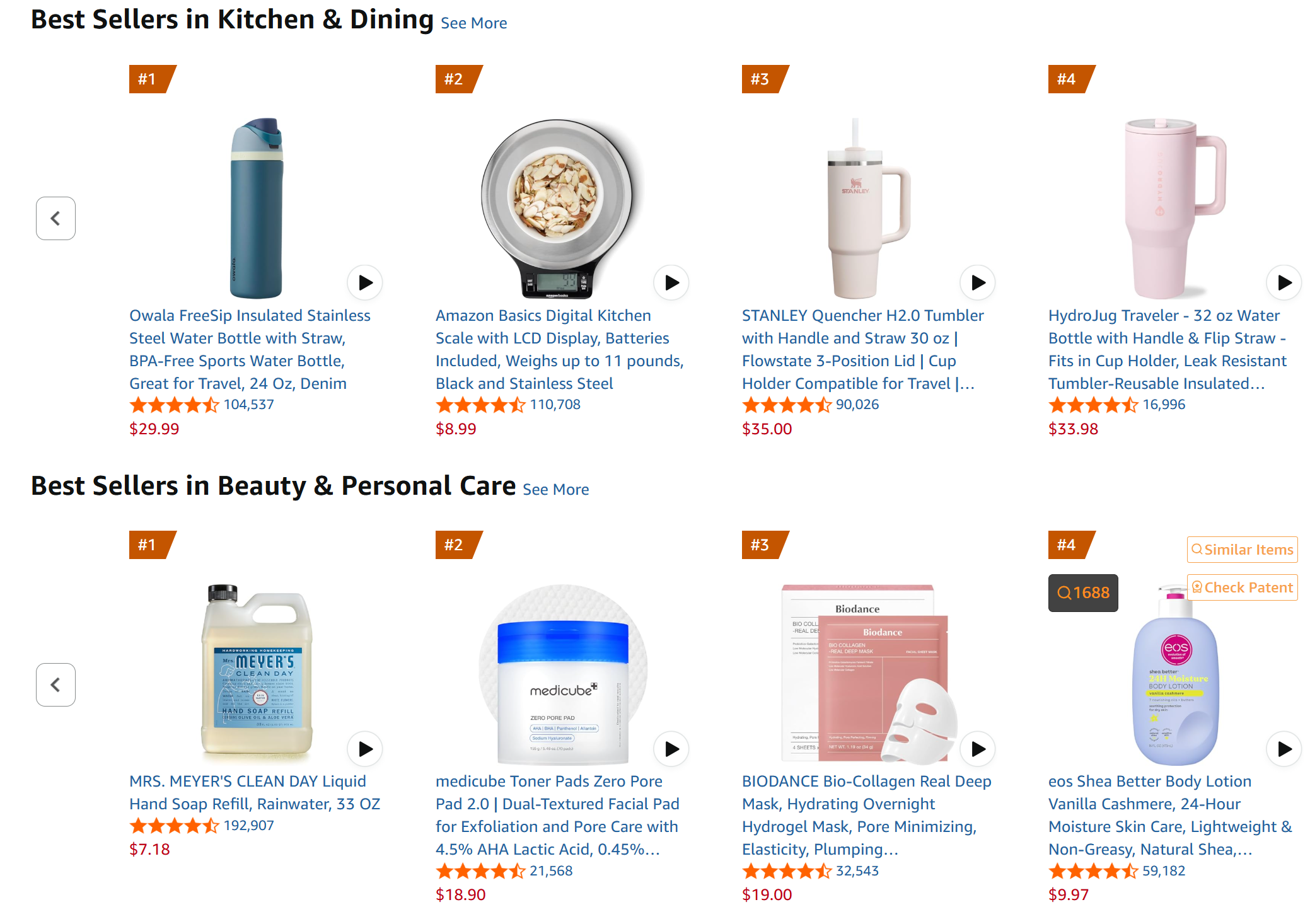
Step 1: Use Amazon Best Sellers for stable demand signals
- Pick a department, then zoom into subcategories where products are directly comparable.
- Open the top listings and note price bands, packaging, promise, and positioning.
- Compare review counts and review velocity to estimate how hard it is to compete.
- Copy buyer language from titles and bullets (it often matches real search terms).
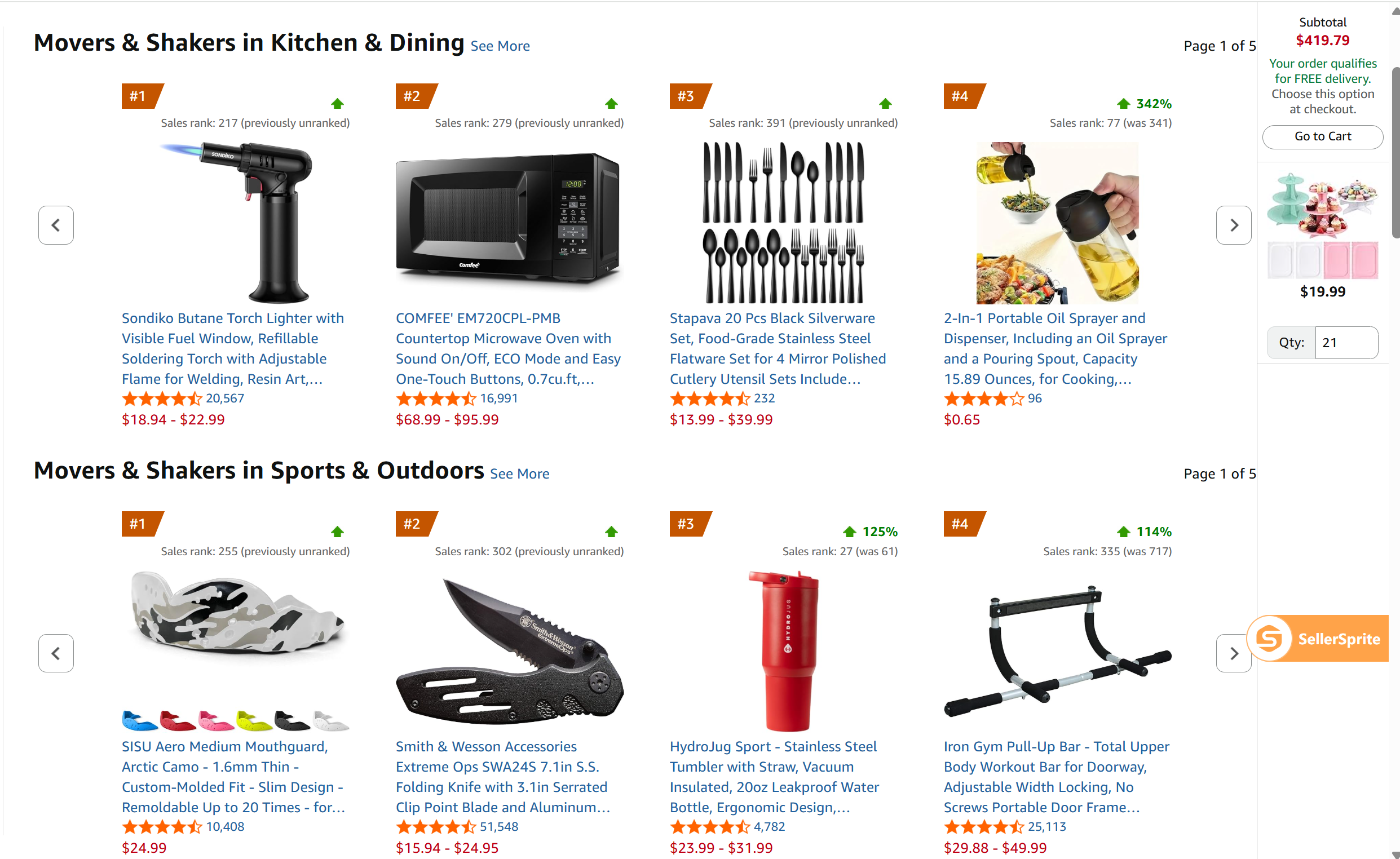
Step 2: Use Movers and Shakers to spot fast momentum
Movers and Shakers is useful because it highlights products gaining rank quickly. Your goal is not to copy the winner, but to identify the repeatable need behind the winner and find an unmet angle.
Step 3: Cross-check other Amazon trend lists
Beyond Best Sellers, Amazon surfaces rising demand through lists like:
- New Releases
- Most Wished For
- Gift Ideas
When you see a cluster of similar items across multiple lists, that is often a signal buyer interest is increasing.
Step 4: Validate seasonality before you commit
- Start seasonal research early. Demand ramps before the season starts.
- Separate true seasonality (predictable peaks) from short spikes (one-off virality).
- Plan inventory timing so you do not order too late or hold stock too long.
A stable catalog often mixes evergreen products with a few seasonal bets supported by trend signals.
Amazon product research workflow with SellerSprite (2026)
This is the workflow we recommend when you want to find winning products on Amazon FBA without guessing. Each step tells you what to do, why it matters, and which SellerSprite tool to use.
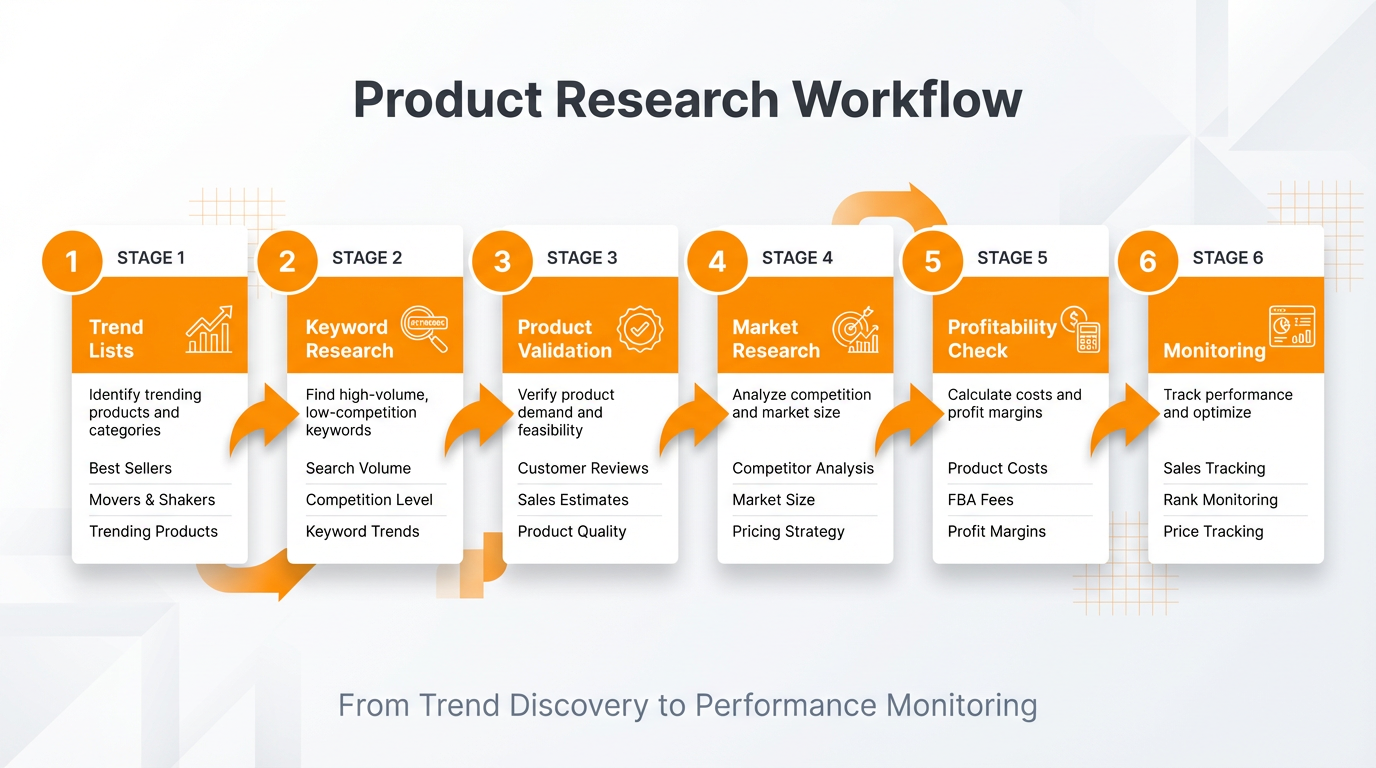
Choose your marketplace and constraints (US, EU, JP)
Define your price band, size/weight constraints, and compliance tolerance before researching. This prevents you from falling in love with ideas you cannot profitably ship.
Quantify demand with Keyword Research
Use keyword search volume, trend, and conversion signals to confirm shoppers are actively searching for the product. Open: Keyword tools
Expand long-tail opportunities with Keyword Mining
Find specific use cases and problem statements in long-tail terms. These often have less competition and clearer intent.
Validate product-level sales and review barriers with Product Research
Filter by monthly sales, revenue, rating count, and growth signals. Open historical charts to see if demand is stable, seasonal, or a spike.
Check market structure with Market Research and Category Insights
Confirm whether the niche is open (sales spread) or dominated (sales concentrated). Concentration often determines how hard ranking will be.
Reverse ASIN and Traffic Comparison to find keyword gaps
Learn which keywords actually drive competitor traffic, then identify gaps where demand exists but listings are not fully optimized. Open Reverse ASIN: Reverse ASIN
Profit-check before inventory
Before you source, simulate fees, shipping, and ad scenarios so you do not scale a low-margin product by accident.
Monitor after selection (do not stop at research)
Track pricing, sales, BSR movement, and keyword rankings. Trends evolve daily, and your advantage is reacting early.
Try this workflow now
If you already have a rough product idea, start with keyword demand, then validate with Product Research and Market Research. Shortlist 10 ASINs, then profit-check the top 3.
Share Your Sourcing Journey With SellerSprite Community
Join the SellerSprite community on the Facebook Group to share your sourcing journey, ask questions, and get support from fellow Amazon sellers.
SellerSprite product research tutorial: copyable filter presets
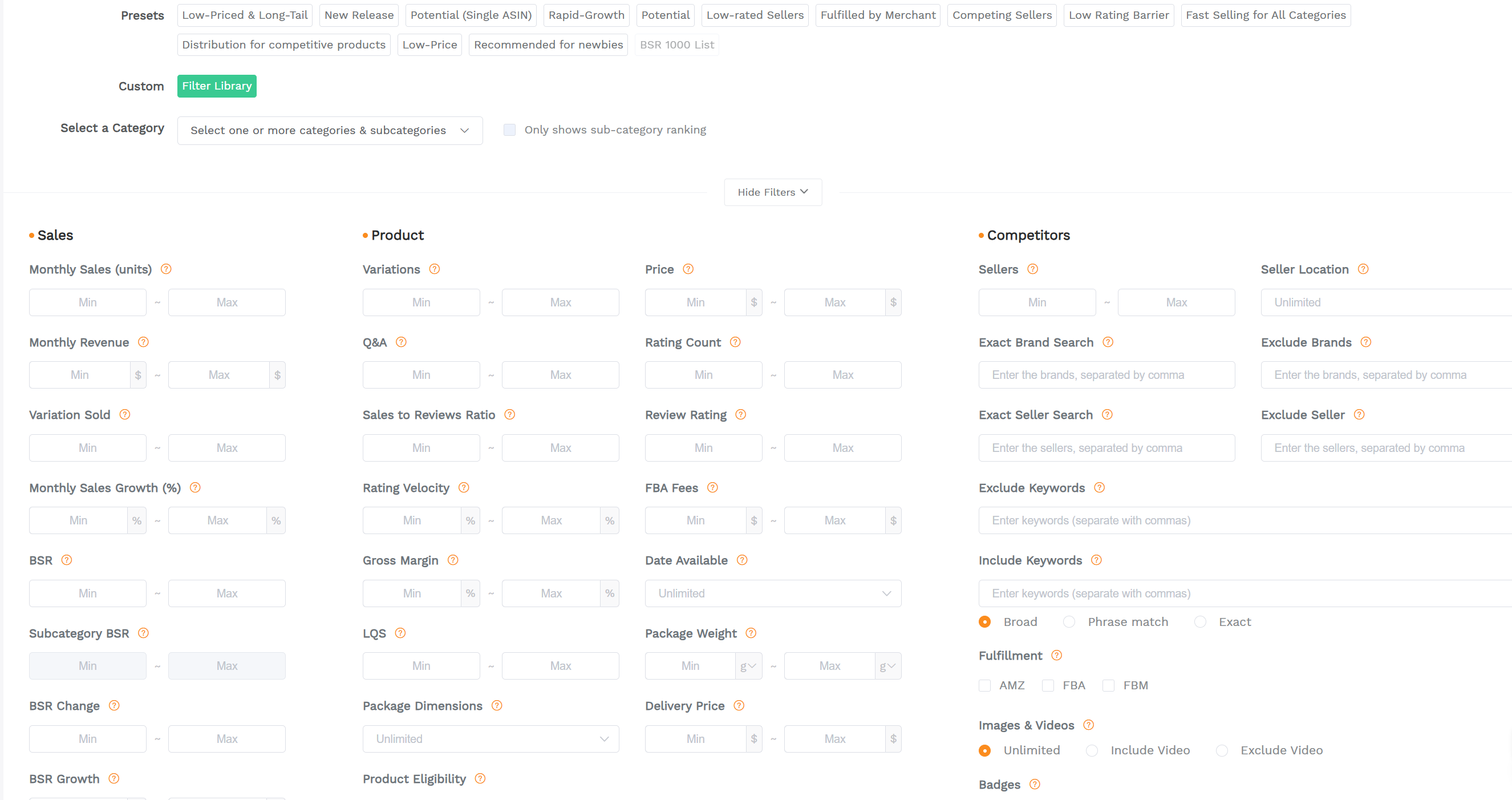
Below are practical filter presets you can copy into SellerSprite tools. They are not universal rules, but they help you quickly narrow to realistic opportunities. Adjust based on your category and marketplace.
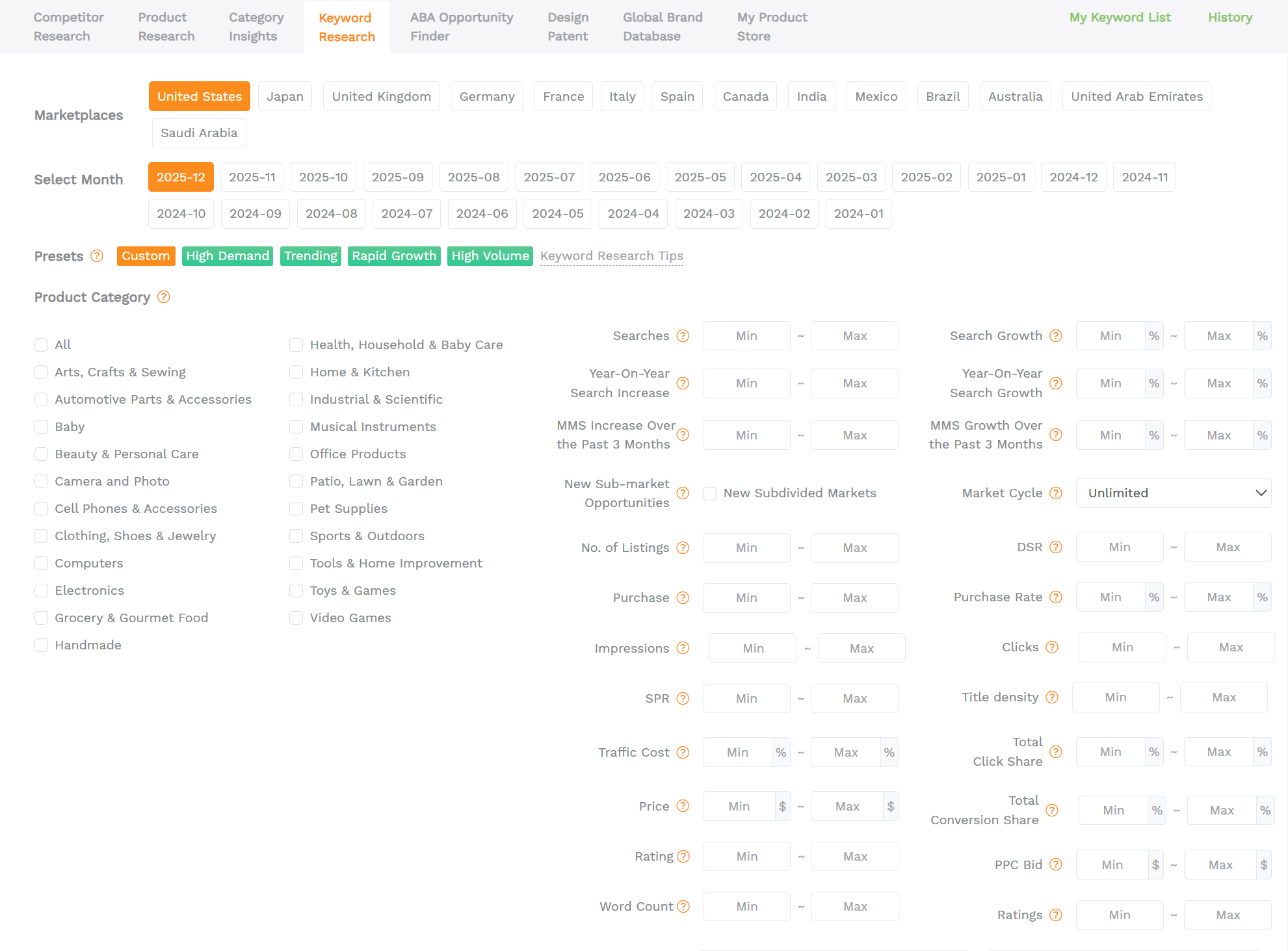
Preset A: Beginner-friendly (prove demand, avoid extreme review walls)
- Keyword Research: focus on mid-volume terms with clear intent (not ultra-broad head terms)
- Product Research: filter for stable monthly sales, then sort by rating count to find markets where the median is not overwhelming
- Market Research: avoid niches where a few listings control most of the revenue unless you have a strong differentiation plan
Preset B: Trend hunting (catch momentum early, then validate quickly)
- Keyword Trend Research: find rising keywords with consistent growth, not one-day spikes
- Product Research: check whether multiple ASINs are selling, not just one viral listing
- Reverse ASIN: extract keywords from the top 3-5 listings and look for long-tail gaps
Preset C: Brand expansion (adjacent variants and bundles)
- Traffic Comparison: identify where traffic concentrates and where your brand can take a slice
- Keyword Mining: find "for X" use cases and bundle signals (refill, set, organizer, travel)
- Product Research: prioritize niches with multiple winning variations (size, color, pack count)
How to spot high demand, low competition niches
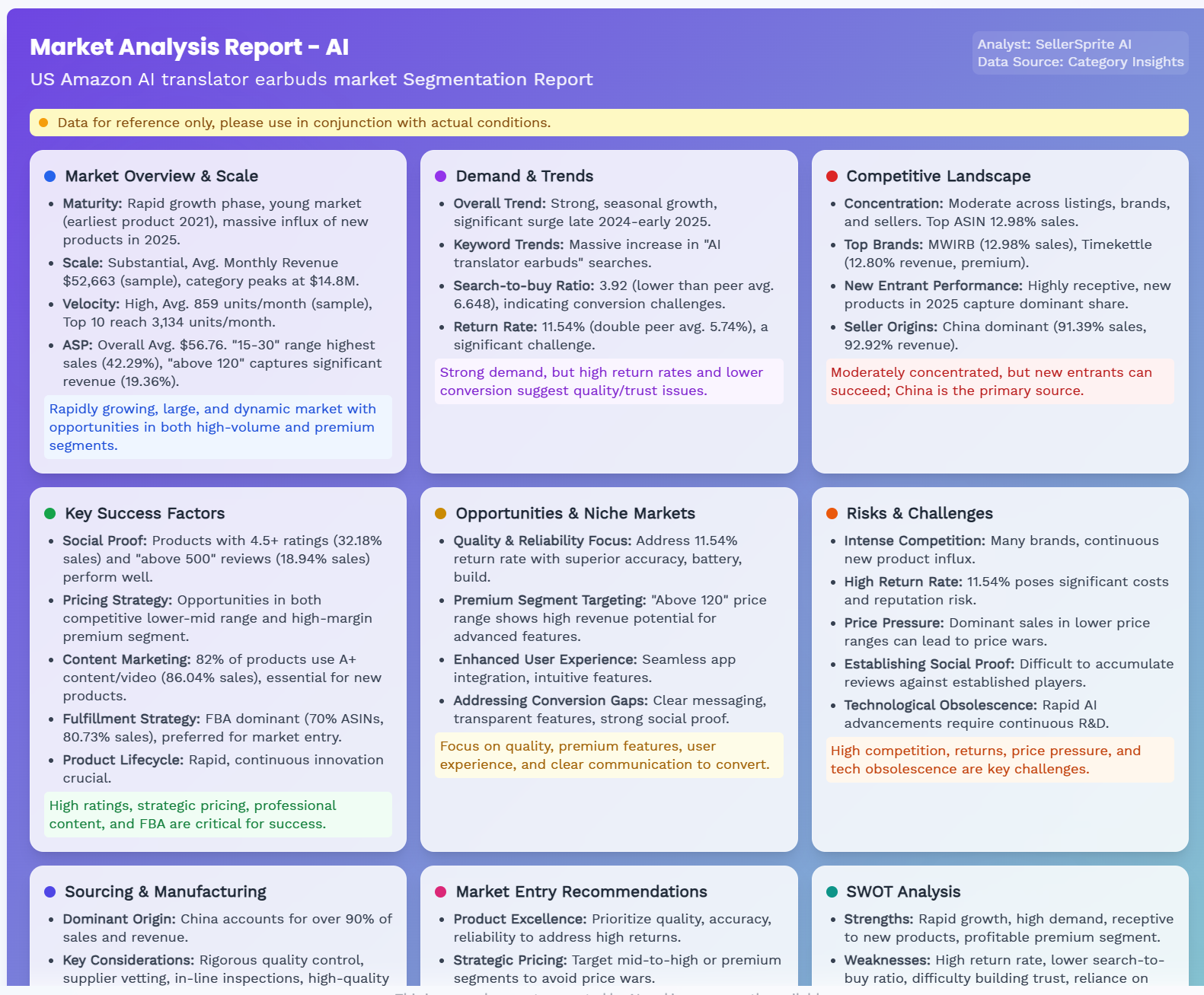
"High demand, low competition" is real when you define it with metrics. You are looking for a niche where demand is proven and growing, while the market structure still leaves room for a new brand to earn visibility.
Signals to prioritize (use these as a checklist)
- Demand: multiple keywords with steady search volume (not one keyword carrying the niche)
- Sales reality: multiple ASINs show consistent monthly sales, not just one outlier
- Review barrier: top listings are not all protected by huge review counts
- Market openness: sales are not overly concentrated in 1-3 listings
- Differentiation: you can improve a feature, bundle, size option, or use case
Red flags
- Extreme concentration where a few listings own most of the sales
- Brand-locked categories where trust dominates buyer choice
- Unrealistic economics (heavy items, thin margins, high return risk)
- Complex compliance that slows launches or increases risk
- Copycat saturation where listings look identical and compete only on price
A cleaner way to evaluate competition (quick competitor workflow)
- Measure market concentration in Market Research to see whether a few listings control the niche.
- Compare review barriers in Product Research. Look for niches where demand is strong but reviews are not extreme.
- Reverse ASIN top listings to extract their keyword footprints and find gaps.
- Watch what competitors launch next using Storefront tracking so you can see trend direction early.
US vs EU vs JP: marketplace differences (GEO signals)
If you want your research to hold up in local search results and in real operations, validate inside the marketplace you sell in. The same product can behave differently across regions due to language, shopping habits, fees, and compliance.
Mini case studies: what the workflow looks like in practice
These examples show how sellers apply the workflow in real decisions. Use them as templates for your own niche research.
Case 1: React to a competitor price drop before you lose rank
- Situation: A home storage seller sees a competitor lower price and spike rank.
- Tool: Product tracking alerts highlight the change, so the seller reacts quickly.
- Action: Match only the price band that matters, keep margin on other variants.
- Outcome: Buy Box loss is short and margin is protected (measurable profit, not guesswork).
If you want to build durable systems, monitoring is part of product research. The best niches are the ones you can defend.
Case 2: Profit-check a product idea before sourcing (electronics accessory)
- Product: USB-C hub
- Planned price: $29.99
- Launch assumption: 25% ACoS (plus a conservative scenario)
- Decision: Compare supplier quotes and fee impact before committing inventory
The key lesson: do not let "high demand" override unit economics. Profit-check early so you do not scale a low-margin SKU.
Case 3: Scale with hidden gem keywords (when demand is real)
- Goal: Improve growth by finding keywords with strong intent and better efficiency.
- Approach: Identify terms with high impressions, good CTR, strong conversion, and controlled ACoS.
- Takeaway: Product research and keyword research connect. Demand is not just volume, it is converting demand.
View The SellerSprite Course Directory
Ready for the next step? Open the SellerSprite Academy course directory to continue building your Amazon FBA skills chapter by chapter.
FAQ
What sells best on Amazon in 2026?
"Best selling products on Amazon 2026" change daily, but evergreen demand often appears in categories tied to routines: home organization, practical kitchen tools, electronics accessories, and personal care. Use Best Sellers for stability and Movers and Shakers for momentum, then validate with keyword and product metrics.
How do beginners find winning products on Amazon FBA?
Beginners should start with a workflow: pick a category, validate demand via keywords, then confirm sales stability and review barriers with product-level data. Avoid niches dominated by a few brands unless you have a clear differentiation plan and budget for ads.
Which Amazon categories are most profitable for FBA in 2026?
Profitability depends on fees, shipping, ad costs, and return rates, not just demand. A "profitable category" is one where you can maintain margin after ads. Always profit-check before you source, especially in electronics and competitive home niches.
How much capital do I need to start testing a product?
The right number depends on your product size, MOQ, shipping method, and ad plan. The safer approach is to start with smaller inventory, validate conversion, then scale. Your research goal is to reduce risk before you buy inventory.
How long does it take to see results after launching?
It depends on category competition and how well your listing converts. If you validated demand and chose a niche with manageable review barriers, you can often learn quickly from early traffic and conversion. The key is to monitor rankings, price, and keyword movement so you can iterate fast.
References
- Jungle Scout, State of the Amazon Seller 2025 (survey methodology and marketplace insights): View report
- Jungle Scout, Amazon’s Best and Worst Categories to Sell In (category-level trends and benchmarks): View report
- Amazon Brand Analytics overview (first-party dashboards concept): Read overview
- Amazon Seller Central Help, Search Query Performance dashboard (first-party search and funnel metrics, availability rules): Help page
About the author
SellerSprite Team
The SellerSprite Research Team creates data-driven playbooks for Amazon sellers, focusing on product research, keyword intelligence, and scalable workflows. This guide is written for 2026 product research and is designed to be practical, skimmable, and easy to apply inside SellerSprite tools.
Learn more: SellerSprite | About us