How to Find Quality, Trusted Suppliers Fast on Alibaba

2025-12-11

Introduction


Sourcing quality suppliers quickly is a crucial step in building a successful Amazon FBA business. In this chapter, we focus on how to leverage Alibaba.com to find trustworthy manufacturers for your product ideas while avoiding scams and fraud. Alibaba has revolutionized product sourcing, removing many barriers that once made finding suppliers daunting. With the right approach and the help of SellerSprite's tools and community, you can confidently secure a reliable supplier for your business. Remember, it's not just about finding the cheapest supplier but about finding a partner who will work with you to deliver quality products and support your business as it grows.


By now, you've likely used SellerSprite's product research tools to identify a promising product niche. The next step is to find a supplier who can bring that product to life. We at SellerSprite recommend focusing on finding the best supplier for your needs, not simply the cheapest. A great supplier can offer better quality, easier communication, and more flexibility to customize your product, helping you stand out from competitors. Let's dive into how to do this effectively, fast.


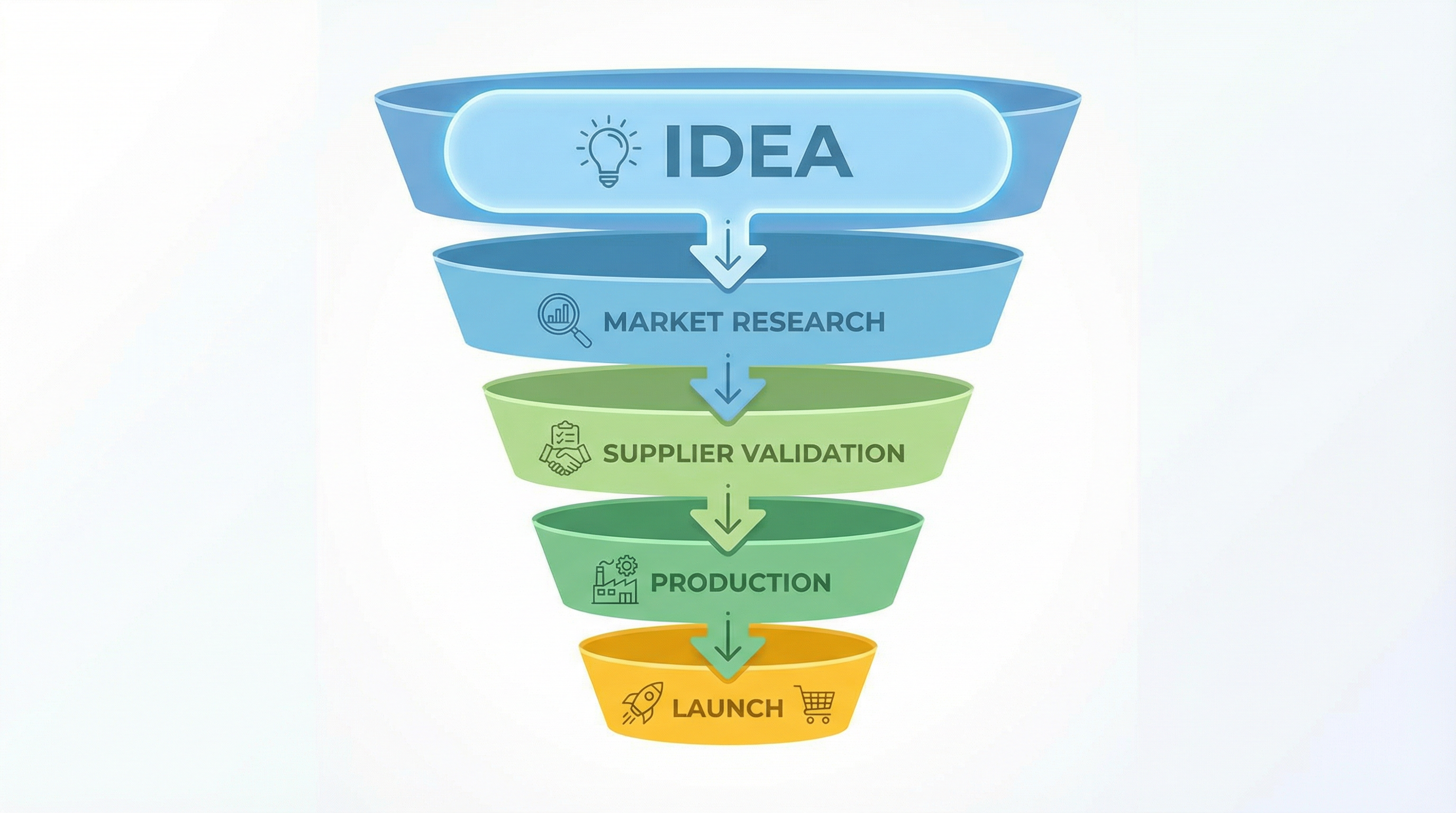
Clean funnel style diagram labeled Idea to Market Research to Supplier Validation to Production to Launch for an Amazon FBA business


Use SellerSprite To Source Directly From Alibaba

Run your product research in SellerSprite, then click the Alibaba button in the product box to instantly find similar products on Alibaba based on picture similarity.

Start Researching With SellerSprite  


Alibaba: Your Gateway to Global Suppliers


Alibaba.com is often described as the "Amazon of suppliers." Instead of buying individual items, on Alibaba you search for companies that produce goods in bulk. It connects entrepreneurs with manufacturers and wholesalers around the world (primarily in China, but also in many other countries). Alibaba has made the sourcing process much easier for everyone. We honestly cannot imagine running an Amazon business without it, because it allows even small startups to find and negotiate with overseas factories as if they had a whole sourcing team.


That said, the vast number of suppliers on Alibaba can be overwhelming. You'll find thousands of listings for any product you search. The key is learning how to filter and identify the gems: the reputable, trustworthy suppliers who are a good match for your business. In this chapter, we'll walk through using Alibaba's platform to efficiently narrow down your options and avoid potential fraud.


Setting Up for Success on Alibaba


Before you begin, create a free Alibaba account. Signing up is straightforward. Just register with your email (browsing and contacting suppliers is free). One tip: Alibaba might send you marketing emails or newsletters after you sign up. You may choose to use a separate email for this account, or simply be prepared to filter some extra emails. Occasionally, these emails can be useful. For example, Alibaba often hosts promotions or sourcing events in September, where you might get discounts on shipping or other perks. Overall, having an account will allow you to save favorite suppliers and communicate with them easily.


Now, let's say you have a product in mind that you want to source. Go to Alibaba's homepage and find the search bar. Enter the name of the product, but don't hit search right away. First, notice the small dropdown next to the search bar (it usually defaults to "Products"). Click that and change it to "Suppliers". This ensures that the search results will show supplier companies, not just individual product listings.


For example, imagine you're searching for silicone soap molds. If you search under Products, you might see thousands of listings, many of which are duplicate products or traders listing the same factory's goods. In one search we tried, "silicone soap molds" returned about 8,300 product results. Instead, by selecting Suppliers and then clicking search, we got around 1,200 supplier results. That's still a lot, but it's a more manageable starting point, and it means these are actual manufacturers or trading companies that make soap molds.


Alibaba search page showing results for silicone soap molds with suppliers selected and product count comparison


Using Alibaba's Filters to Find Trustworthy Suppliers


Alibaba offers powerful filters to help you quickly narrow your list to high-quality suppliers. On the results page, you'll see checkboxes and options to refine your search. The two most important filters to use right away are:


  • Trade Assurance: Check this box. Trade Assurance is Alibaba's own buyer protection program. When a supplier offers Trade Assurance, it means you can pay through Alibaba's secure system, and your payment is protected. If the supplier fails to ship your order, or the products are very different from what was agreed, Alibaba can step in to refund your money. It gives peace of mind because your money won't disappear into a black hole if something goes wrong. Some seller forums might suggest using PayPal for safety, but Alibaba's Trade Assurance is safe and convenient, so take advantage of it.


  • Verified Supplier: Check this box as well. A Verified Supplier on Alibaba is a company whose credentials and claims have been inspected by a third party. When a supplier is verified, it means an independent agency has visited their factory or office and confirmed that things like their business license, number of employees, and production capabilities are legitimate. This filter helps you avoid suppliers that might vanish overnight. Verified suppliers have skin in the game and have invested in proving their legitimacy, which is a very good sign that they're serious and established.


After applying Trade Assurance and Verified Supplier filters, you'll notice the number of search results drops, often dramatically. In our example, the list went from 1,200+ suppliers down to only about 300. We just filtered out more than half of the options, leaving a higher concentration of trustworthy vendors. Next, we'll refine the list even more.


Filter by Target Market Experience


If you have a specific target market,like North America or Europe, it's wise to filter for suppliers experienced in serving that region. Why? These suppliers will likely be familiar with the regulations, quality standards, and customer expectations in your market, meaning fewer surprises for you down the line.


On Alibaba's filter sidebar, look for options related to Markets Served or Export Markets. Here you can select regions like North America, Western Europe, etc. Choose the regions where you plan to sell your product. Then click the confirm or apply button for that filter.


By doing this, you're telling Alibaba to show you suppliers who frequently export to those regions. For instance, if you select North America and Western Europe, you might see your results drop a bit further. You're essentially prioritizing suppliers who already know how to deal with things like FDA regulations, CE certifications, or other import/export requirements specific to your target countries. It's not a required step, but it can be a helpful way to prioritize experienced exporters.


Filter by Important Certifications


Another filter set to consider is Certifications. The best suppliers often have internationally recognized certifications that speak to their manufacturing standards and social responsibility. Depending on your product and industry, you might look for specific certificates. Three common and valuable ones to look for are:


  • ISO 9001: This is a quality management certification indicating the company consistently meets strict quality standards and has effective quality control processes.
  • BSCI: This stands for Business Social Compliance Initiative. It ensures the supplier follows ethical labor practices and social responsibility guidelines (important if you care about fair working conditions in the factories that make your products).
  • ISO 14001: This is an environmental management certification. It indicates the supplier is mindful of environmental impact, following practices to reduce pollution and waste.


Select any certifications that are relevant (the three above are a great start for most products), then apply the filter. Bear in mind that not every legitimate factory has these certifications, but filtering for them can further ensure you're dealing with professional, more established manufacturers that invest in good practices. After applying certification filters, you'll again see the number of suppliers adjust. In our running example, it went down to double digits (around 100 suppliers or even fewer). At this point, you've zeroed in on a small pool of candidates that meet a baseline standard of quality, safety, and trustworthiness.


Evaluating Supplier Listings: Experience and Location


Now that you have a refined list of potential suppliers, it's time to dig into the details of each. The Alibaba search results show a snapshot for each supplier. Here are a couple of key things to note at a glance:


  • Years of Experience on Alibaba: This is the number, often shown as a badge like "11 YRS" or "5 YRS", indicating how long the supplier has been active on Alibaba. If a supplier has 10+ years on Alibaba, it's a good sign they are stable and have successfully dealt with international buyers for a long time. That doesn't mean you should never consider a younger supplier, but be cautious with brand-new accounts. Unfortunately, there have been scams where a "supplier" collects a big deposit and then disappears. These bad actors typically don't last long on the platform. An established supplier with many years on Alibaba is far less likely to be a fraud. Plus, experienced suppliers have been through the annual cycles of peak seasons, Chinese New Year shutdowns, etc., and can often provide valuable advice to you (their client) on timing orders and avoiding common pitfalls.


  • Location and Industry Hubs: The location of the supplier (usually a city or province in China, displayed in the listing) can tell you about their industry. China has specialized manufacturing hubs; whole regions often focus on particular product categories. For example, "Dongguan" is a city known for silicone and plastics manufacturing. If you notice many of your search results are from Dongguan, that suggests it's a major hub for silicone products. Knowing this can give you context. A supplier in a major production hub might have better access to materials or subcontractors, and there's healthy competition that can lead to better pricing. This doesn't mean you should automatically rule out a supplier from a less common area, but when you're comparing two suppliers with similar profiles, the one in the well-known manufacturing region can sometimes be the safer choice due to the local industry ecosystem.


Become Part of the SellerSprite Community

Become a part of the SellerSprite community and ask the SellerSprite team for a China Industrial Belt guide so you understand key production hubs for your product.

Join the Discord Community  


By reviewing experience and location, you can start forming a shortlist of top contenders. For instance, you might decide to focus on the 10 suppliers that have at least 5 years on Alibaba and are located in known manufacturing regions for your product category.


Manufacturer or Trading Company? Narrowing Your Shortlist


When you click on a supplier's page, you'll find a wealth of information about them. One important aspect to discern is whether you're dealing with a manufacturer or a trading company (or sometimes both, some trading companies have their own small factories, and some manufacturers also act as trading companies for additional products). Why does this matter? In general:


  • Manufacturers are the actual factories making the product. Working directly with a manufacturer can often give you more flexibility. They can tweak the product and usually offer lower prices since there's no middleman markup. They also have direct knowledge about production, which can be invaluable when solving problems or discussing customizations.
  • Trading companies are intermediaries that source products from manufacturers and resell them to you. They often offer a wider range of product types, since they can work with different factories for different items and can simplify sourcing if you need multiple product categories. However, they usually charge more and might enforce higher Minimum Order Quantities (MOQs) because they need to cover their margin. Communication can also be a step removed from the actual production floor, which sometimes slows down problem-solving or specific inquiries about manufacturing.


To figure out which type a supplier is, look at two things:


  • Examine Their Product Range: Navigate to the supplier's product catalog or listings on their Alibaba page. Are most of the products in the same category or made of the same material? For example, if you see they mostly sell various silicone items (spatulas, baking molds, silicone gloves, etc.), that's a strong indicator you've found a specialized silicone manufacturer. On the other hand, if their products are all over the place (silicone molds, electronics, clothing, and so on), it likely means you're looking at a trading company showcasing a diverse catalog. We tend to be cautious with suppliers that look like a "jack of all trades." In our experience, focusing on specialists leads to better outcomes. A company that lives and breathes your product category will usually have better quality control and more expertise, and they might be more open to small customizations or smaller order sizes to win your business.
  • Check the Company Profile: On the supplier's page, there is a section with information about the company. Look for clues like "Business Type" which might say Manufacturer or Trading (sometimes it will list both). Also check the year established, number of employees, and any photos or certifications. Verified supplier pages often show documents and pictures. For example, you might see their ISO certificates, factory machines, or assembly line in action. All of this helps you build a picture of who you're dealing with. If something doesn't add up (for example, they claim to have 500 employees but the photos show a tiny workshop, or they list a dozen completely unrelated product categories but say they're a small factory), consider it a red flag.


By now, you should have a clear sense of your top 10 or so suppliers. All of them offer Trade Assurance, are Verified, have solid experience, and appear to be actual manufacturers or at least very close to the source for your type of product. The final step is to reach out and start a conversation to see which one is the best fit for you.


Preparing to Contact Your Shortlisted Suppliers


Once you have your shortlist, it's time to contact each supplier to request quotes and ask initial questions. This step is crucial because it not only gets you pricing info, but also lets you gauge their responsiveness and communication quality. A supplier who responds promptly and professionally to your inquiry is likely to be a good partner moving forward.


Before you send a message, prepare a concise introduction and list of questions (essentially, a Request for Quotation (RFQ)). In your message, you'll want to include:


  • A brief introduction about your business. For example, that you are an ecommerce seller or the owner of a small business, and mention your brand name if you have one.
  • The specific product you are interested in, with details. For instance: "I'm looking for a silicone soap mold with 6 cavities for making homemade soap bars."
  • Any customizations or requirements you have. For example: "The molds need to be made of food-grade, heat-resistant silicone (up to 240°C) and I'd like each cavity to have our company's logo embossed at the bottom."
  • Your expected order quantity for the first order and possibly an idea of future orders if things go well. For example: "Our initial order will be 500 units. If the product sells well, we expect to order 1,000 to 2,000 units over the next year."
  • A request for key information and a quote. You can list a few questions, such as:
    • What is your best price for this product at the quantity of 500 units (or at higher quantities like 1,000 units)?
    • What is the typical production lead time for an order of this size?
    • Are you able to make the customizations I specified, like logo embossing and specific material requirements?
    • Do you have experience exporting to [your country]? For example: "Do you have other clients in the US, and are you familiar with US import regulations for silicone products?"
    • What shipping methods do you offer and can you provide an estimated shipping cost to my location?
    • What payment terms do you accept, and can this order be placed through Alibaba Trade Assurance?
  • A polite closing. Thank them for their time and let them know you look forward to their reply. For example: "Thank you for your time. I look forward to your reply and hope we can work together. Have a great day!"


Keep the tone of your message professional and friendly. Clarity is key. Suppliers appreciate it when you are clear about what you want. Also, consider attaching an image of the product or a similar product you have in mind. A picture can help avoid misunderstandings, especially if your product has unique features.


Pro Tip: Take a moment to personalize each message a little bit. Mention the supplier's company name or refer to something you saw on their profile. For example: "I see that XYZ Manufacturing has over 10 years of experience making silicone kitchenware, which is great." A small detail like this shows that you chose them deliberately and can set a positive tone. It doesn't take much effort and you can keep most of your message the same for all suppliers and just tweak the opening line or two, but it can go a long way in getting better responses.


Don't feel overwhelmed by this process. After you draft your first inquiry, you can use it as a template for the rest. Simply change the specifics for each supplier. In the next chapter, we'll provide you with an actual template and more tips on following up, handling responses, and negotiating with suppliers.


Share Your Sourcing Journey With SellerSprite Community

Join the SellerSprite community on the Facebook Group to share your sourcing journey, ask questions, and get support from fellow Amazon sellers.

Join SellerSprite Facebook Group  


Conclusion: From Countless Options to a Trusted Partner


By following the steps in this chapter, you've transformed a daunting task into a manageable process. You started with a vast pool of suppliers and used smart filters and criteria to narrow it down to a handful of high-quality candidates. Instead of randomly picking a supplier and hoping for the best, you took control and applied a strategy to find the right partner for your business.


This preparation will pay off. A trustworthy, capable supplier is an asset to your Amazon FBA journey. They can ensure you get a quality product, delivered on time, and even help you refine your product with their expertise. By avoiding the scams and unreliable providers, you save yourself from potential nightmares like lost money, defective products, or endless delays.


You're doing an amazing job so far. Sourcing a product is a big milestone, and you're tackling it one step at a time. Give yourself credit for reaching this stage! As you move forward, remember that patience and diligence now will result in a much smoother launch for your product.


In the next chapter, we'll shift from research to action: you'll learn how to communicate effectively with these suppliers, evaluate their quotes, order samples, and ultimately decide which supplier is the perfect fit for you. You're on the brink of turning your product idea into reality by partnering with a manufacturer.


Until then, remember that the SellerSprite community is here to support you. If you have any concerns or want to double-check something, don't hesitate to reach out in our Discord or Facebook group. Sometimes a quick chat with experienced sellers can give you just the insight you need or reassure you that you're on the right track.


Take a deep breath. You've narrowed down your list to the best of the best, and that's a big accomplishment. Stay positive and keep that momentum going. You're well on your way to building a thriving Amazon business with the help of great suppliers!


View The SellerSprite Course Directory

Ready for the next step? Open the SellerSprite Academy course directory to continue building your Amazon FBA skills chapter by chapter.


Open Course Directory  

User Comments
Avatar
  • Add photo
log-in
All Comments(0) / My Comments
Hottest / Latest

Content is loading. Please wait

Latest Article
Tags