Negotiating the Best Price for Your Product

2025-12-17

Congratulations on finding a promising product and potential suppliers using SellerSprite's tools! Now it's time to negotiate with your supplier to get the best price for your product without sacrificing quality. In this chapter, we'll cover essential negotiation strategies and a powerful insider hack. The goal is not just to get the lowest price, but the best overall deal that sets you up for long-term success. Let's dive in with a friendly, professional approach that will boost your confidence in supplier negotiations.


Seller negotiating with a supplier over pricing and terms, emphasizing partnership and long term value


Build Strong Relationships with Suppliers


Relationships are key when negotiating, especially with suppliers in China or anywhere in the world. It's common for new sellers to focus only on contracts and pricing, but cultural insights show that building a good rapport can be just as important as a contract. In Western business culture, we often measure a relationship's success by how well each party sticks to the contract. In contrast, many Chinese suppliers place a high value on personal relationships and trust. They prefer to do business with people they like and respect.


How can this benefit you? Maintaining a polite, professional demeanor and treating your supplier as a valued partner can pay off in many ways. For instance, after the busy holiday season, like the Q4 rush of Black Friday and Christmas, many sellers will be placing large restock orders. If you've fostered a strong relationship, your supplier might prioritize your orders over others. This means you could get faster production times, helping you restock sooner than your competition. A supplier who enjoys working with you may also be more willing to accommodate special requests, customize products, or even tip you off about new product opportunities before others hear about them. These are advantages you cannot simply demand in a contract. You earn them by building genuine goodwill.


In short, approach negotiations as a relationship-building exercise, not just a transaction. Be kind, patient, and respectful in all communications. Over time, strive to become one of your supplier's favorite clients. When suppliers value the partnership, they often go the extra mile to help your business thrive.


Prioritize Quality Over Price


When negotiating prices, remember that cheaper isn't always better. Your goal is not to manufacture the cheapest product possible at the expense of quality. Instead, aim for the highest quality product you can produce profitably. Think in terms of long-term profit and customer satisfaction.


For example, which would you prefer: a product with a 35% profit margin that earns glowing reviews and has low return rates, or a product with a 40% margin that customers complain about due to poor quality? In the long run, the higher-quality product will likely make you more money. Why? Because a low-quality product can lead to returns, bad reviews, and even jeopardize your seller account's health. Those issues eat into your profits, even if the margin looks good on paper. On the other hand, a well-made product builds your brand reputation and encourages repeat business, sustaining your profits over time.


Keep this perspective when negotiating with suppliers. If a supplier offers to cut the unit price significantly, ask yourself what compromises might be involved. Often, a dramatically lower price means cheaper materials or less attention to detail. Some suppliers will meet an ultra-low target price if you push them, but you might end up with flimsy materials or inconsistent quality. It's usually worth paying a bit more to ensure the product meets your standards. As an Amazon seller, quality issues can become very costly, through returns or loss of Buy Box due to complaints. Using SellerSprite's suite of seller tools, you can forecast your profits and see that investing in quality often pays off. Focus on profit, not just cost. A higher production cost is fine if it leads to a product that delights customers and distinguishes your brand.


Forecast Profit Before You Negotiate

Use SellerSprite to estimate your margin and set a realistic target price so you protect quality while staying profitable.

Use SellerSprite Profitability Calculator 


Lastly, remember that maintaining quality also ties back to relationships. If you consistently push for the rock-bottom price, a supplier may feel you don't value their work, which can strain the partnership. But if you show that you care about creating a great product and are willing to pay a fair price for it, suppliers will respect you more and be more invested in your mutual success. Quality and relationships go hand in hand, forming the foundation of a strong business deal.


Leverage Competition (Politely Let Them Know You Have Options)


While building a friendly relationship, you should also signal to your supplier that you have other options. This creates a sense of healthy competition and motivates them to offer you their best pricing and service. You can convey this professionally without sounding aggressive or threatening. For example, when requesting quotes or negotiating, mention that you are speaking with a few manufacturers to find the best fit. This is a truthful and common practice because savvy sellers always compare multiple suppliers.


By letting them know you're considering other quotes, you introduce a gentle urgency. A good supplier will understand that they need to put their best foot forward to win your business. Often, just knowing that alternative suppliers are in the picture will make your supplier more willing to negotiate on price or other terms to stay competitive.


One practical way to communicate this is through your initial inquiry message. In your message, after describing your product requirements, add a line such as: "We are just about ready to make a decision and will be choosing the supplier that offers the best overall value. We are currently in discussions with several suppliers." This statement is polite and factual. It signals that while you appreciate their time, they do not have an exclusive lock on your orders yet.


Remember, the tone should remain professional and courteous. You're not giving an ultimatum but simply being transparent that you're surveying the market. Most suppliers will respect that you are doing your due diligence. In fact, this approach can even enhance your credibility, as it shows you are a serious business-minded buyer. Just be sure to follow through ethically. If you promise larger future orders in exchange for a smaller initial order, for example, only do so if you truly intend to build that long-term relationship. Honesty and respect will always serve you best in negotiations.


Use Visual Aids to Avoid Miscommunication


Negotiating with overseas suppliers often happens through email or messaging apps, and sometimes language barriers can create confusion. Even if both you and your supplier can communicate in English, misunderstandings happen, especially when describing product specifications or changes. A simple yet powerful solution is to use images and videos in your communication. Visual aids transcend language and clarify your requirements much more effectively than words alone.


For instance, suppose the supplier sent you a sample product and there's a small change you want. Instead of writing a long description of the change, take a photo of the sample and mark it up with annotations. You might draw a red arrow pointing to the area that needs adjustment and add a short note like, "Please use black material for this part," or "This section should be 2 cm longer." Similarly, if you have a prototype or an example of the product you want, share pictures of it with your supplier.


Videos are another excellent tool. You can record a quick video showing the product or sample and talking through the changes or questions you have. For example, record yourself unboxing the sample and pointing out each feature, saying which parts are great and which parts you'd like to improve. Even a 30-second video can convey a lot of detail and tone that is hard to get across in text. Your supplier can replay the video to make sure they catch every detail, reducing the chance of mistakes.


Using images and videos not only prevents miscommunication but also speeds up the negotiation and production process. When everything is clear, you won't lose days going back and forth clarifying details. Faster clarity means faster decisions and production, which ultimately means you can start selling sooner. Time is money in the Amazon business, so efficient communication gives you an edge.


Don't worry if you feel self-conscious about your language skills or accent. Visual communication is a universal aid. Many suppliers appreciate this effort because it shows you are proactive and detail-oriented. It makes their job easier, too. Next time you negotiate or clarify a point, consider attaching a product photo or a short video along with your message. It can be as simple as a quick sketch or a smartphone photo. This small step can build mutual understanding and trust, showing that you're serious about getting things right.


Negotiate All the Terms (Not Just Unit Price)


Price per unit is usually the first thing people negotiate, but it's not the only thing on the table. Think holistically about your deal with the supplier. There are many factors you can discuss and optimize. Being flexible and creative in negotiating other terms can sometimes save you more money or add more value than a simple price cut. Here are some key factors to consider:


  • Production Lead Time: If you need your products faster, ask if the supplier can shorten the manufacturing time. For example, you might say, "I'd really like to launch quickly. Is there any way to reduce the lead time on this order?" Sometimes, suppliers can rearrange their schedule or expedite materials to deliver sooner. Even if they can't speed it up, understanding why it takes a certain time (maybe the paint needs 48 hours to dry, or a component is sourced externally) is valuable. In some cases, you might offer something in return, like a slightly higher price per unit for faster turnaround. Or, if timing isn't critical for you, negotiating a longer lead time could even get you a better price because the supplier can slot your order in conveniently. The key is that lead time can be negotiable.


  • Minimum Order Quantity (MOQ): Especially for your first order, you might not want or be able to purchase the high quantities that suppliers often require. If a supplier's MOQ is 1,000 units and you only want to start with 300 to test the market, discuss it with them. A common approach is to explain, "Our initial order will be a smaller test run. Once we confirm the product's success in the market, we plan to place much larger orders regularly." Emphasize the long-term opportunity for the supplier. Many manufacturers will agree to a smaller first order if they see the potential for a lasting partnership. They might ask for a slightly higher price per unit for the small batch, which is fair. It's often worth it to avoid overstocking a product before you've validated its sales. Negotiate a reasonable MOQ that lets you test your product's viability while still showing commitment to grow the business together.


  • Packaging and Branding: Product packaging can be another negotiating point. If your supplier provides basic packaging by default, you can discuss upgrades or custom packaging. Perhaps you want a better box, or to include an instruction pamphlet or an insert card with your branding. These might add cost, but you can negotiate how that cost is handled. For example, ask if they can include a simple one-color logo on the box at no extra charge, or bundle the design cost into the total. Sometimes, a supplier might throw in basic custom packaging for free to win your order. Conversely, if you don't need fancy packaging for the first order, you could negotiate a lower price by sticking to simple packaging. Always keep the customer experience in mind, as good packaging adds value to your brand.


  • Labels and Stickers: Amazon sellers often need additional labels on products, like UPC barcodes, FNSKU labels, or warning stickers. Applying these at the factory saves you time later. Ask your supplier to handle the labeling. Many are familiar with Amazon requirements. You could negotiate this service for free or at least at a minimal cost. For instance, say, "Will you print and apply the FNSKU barcodes on each unit? We can provide the label files. It would really help us streamline our logistics." Getting these small tasks done as part of the manufacturing process can be a huge convenience, and suppliers often have no problem doing it, especially if they want your business. Just confirm whether there's any charge for it and see if that can be waived.


In all these negotiations, maintain a win-win mindset. You want to get favorable terms, but the supplier shouldn't feel like they are losing out. Often, if a supplier can't budge on unit price, they might be able to add value in other ways, like better packaging or faster production, to keep you happy. Be sure to explore and negotiate the entire deal package, not just the price per item.


Always Ask "Why" and Learn from Your Supplier


Great negotiators are also great listeners and learners. If a supplier tells you something that you don't like, for example, "we can't go any lower on price" or "we can't use that material you requested", don't just accept it at face value or react with frustration. Instead, calmly ask "Why?". By asking for the reasons behind a limitation or a cost, you open the door to understanding their perspective and potentially discovering alternatives.


Suppliers are experts in the products they manufacture. A high-quality, trustworthy supplier will often be happy to educate you about the production process, material costs, or industry standards. This information is gold for you as a seller. Let's say you are sourcing a set of stainless steel kitchen utensils and you received quotes from two factories. One factory's price is significantly higher than the other's. Rather than assuming the expensive supplier is trying to rip you off, ask them why their price is higher. You might learn that the stainless steel grade they use is superior, for example, it's thicker, truly rust-resistant, or dishwasher safe, whereas cheaper quotes might be using lower-grade metal that could rust or bend easily. In one real scenario, a seller found that a higher-priced supplier provided an American article explaining the difference in steel grades, justifying their cost. The cheaper suppliers hadn't disclosed that they were using a subpar grade. By asking questions, the seller was able to make an informed decision and avoid a quality trap that could have led to unhappy customers.


Another benefit of asking "why" is that it can lead to creative solutions. Maybe a supplier says, "We can't meet that price because our raw material costs are high." If you know this, you could discuss alternatives like using a slightly different material, or you might negotiate other terms like those we discussed above, instead of price. Understanding the obstacle turns you and the supplier into a team addressing a problem, rather than adversaries in a haggling match.


Additionally, the knowledge you gain can become part of your product's story. If a supplier shows you how your product is made or tested, consider asking for photos or videos of the process. Many customers love seeing behind-the-scenes manufacturing, especially if you highlight quality, sustainability, or ethical production. Sharing a short video of your product being crafted or quality-checked in the factory can be fantastic content for your brand's social media or product listing. Of course, always ask permission before publicizing any factory footage, but most suppliers are proud of their work and enjoy seeing their client share it. This transparency can set you apart from competitors who are just selling a generic item. And it all starts with being curious and asking good questions.


In summary, never be afraid to ask "why" during negotiations. Far from annoying the supplier, it often signals to them that you care about the details and quality. Good suppliers appreciate informed clients. By learning the reasoning behind prices and processes, you become a stronger business owner, able to make better decisions and even market your product more effectively. Every negotiation, win or lose, is a chance to deepen your understanding of the product and the industry.


Insider Hack: Use 1688.com for Price Benchmarking


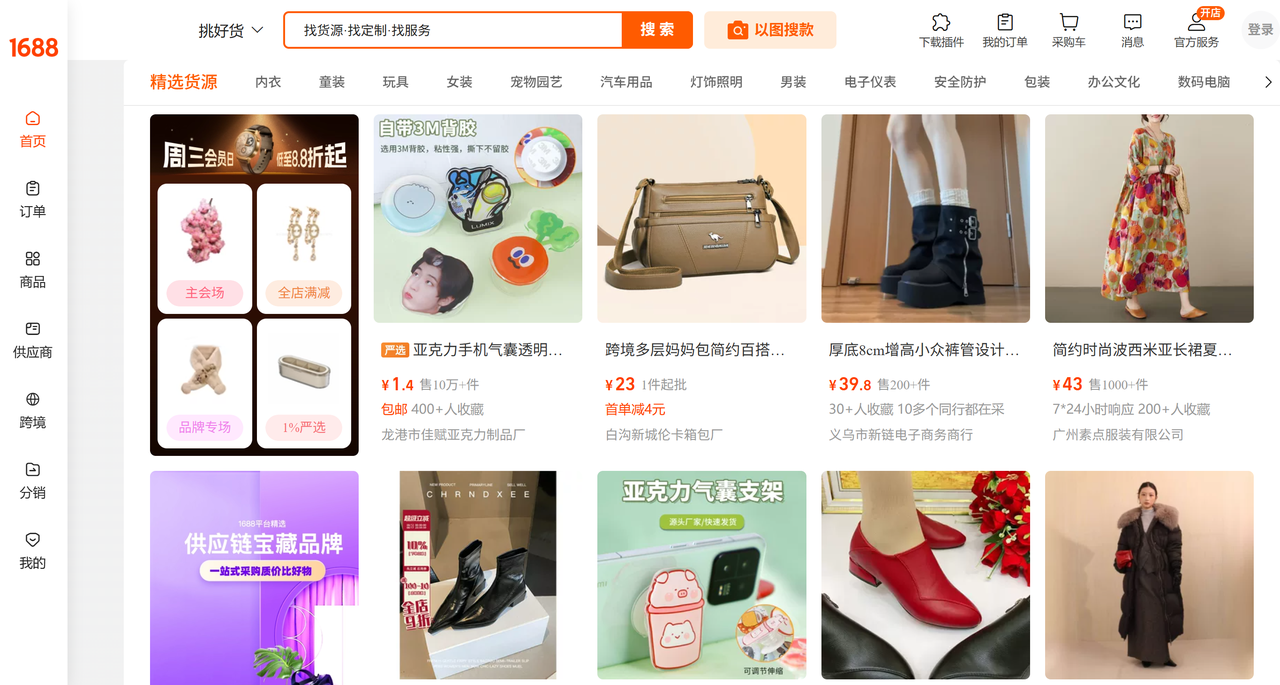
Now that we've covered the fundamentals of negotiation, here's a powerful insider hack to give you instant negotiation leverage: using 1688.com for price benchmarking. Some of our SellerSprite community members use this technique to get a better sense of a product's true wholesale price in China. 1688.com is a sister site of Alibaba, catering to the Chinese domestic market. Think of it as Alibaba's local Chinese version. Products on 1688 are often listed at lower local prices (in Chinese yuan) because the suppliers expect to sell to domestic businesses, with no need for international marketing frills like English-speaking staff or fancy English websites.


How does this help you negotiate? By checking 1688, you might find the same or similar product you're sourcing, but at the prices Chinese companies pay. This can be a reality check if you suspect the quotes you got on Alibaba are inflated. However, a word of caution: use this hack for information and leverage, not necessarily to switch suppliers outright. The suppliers on 1688 may not speak English, might not have experience with international shipping or Amazon requirements, and the product quality or specifications could differ. Our advice is to leverage the pricing information in discussions with your chosen supplier from Alibaba or wherever you found them, rather than trying to buy directly from 1688, unless you're very comfortable doing business in Chinese.


Here's how to use the 1688 strategy step by step:


  • Visit 1688.com using Google Chrome Browser: Chrome can automatically translate web pages. 1688's interface will be in Chinese by default, but Chrome's translate feature can convert some text to English. This makes navigation a bit easier, though product listings might still be mostly in Chinese.
  • Search by Keyword with Translation: Think of a few Chinese keywords for your product. If you don't know Chinese, use Google Translate to find the Chinese term. For example, if your product is a silicone baking mold, type "silicone baking mold" into Google Translate and get the Chinese translation (e.g., "硅胶烘焙模具"). Copy and paste that into the 1688 search bar. This can help find relevant listings. Keep in mind that the translation might not be perfect, so you may need to try variations or more general terms.
  • Search by Image: If keyword searching is tricky, 1688 has a fantastic feature: you can search by image. Take a clear image of the product you want, for instance, a photo or screenshot of a similar item from Alibaba or Google. On 1688's search bar, click the little camera icon. Upload your product image. The site will show you listings that look similar to that image. This often helps you find the exact or very similar item on 1688 without worrying about the right keywords. It's like showing a shopkeeper a picture of what you want, a universal language.
  • Browse the Results: Once you have some search results, look for listings that closely match your product. You might find multiple suppliers selling what appears to be the same item. Don't be alarmed if you see the same product photos as on Alibaba because many factories use the same images. Focus on the numbers. What price range do you see? Keep in mind 1688 will show prices in CNY (Chinese yuan). You might see a tiered pricing like "¥8.50 for 100+ pieces, ¥7.80 for 500+ pieces," etc. Pick a ballpark figure, likely the price for a modest quantity that's similar to what you plan to order.
  • Convert the Currency: Use a currency conversion tool or simply type "CNY to USD" into Google. For example, if the 1688 listing shows approximately ¥9.60 per unit for a certain quantity, plug that in. ¥9.60 might come out to around $1.40 USD, depending on the current exchange rate. This gives you an estimated unit cost in dollars from the Chinese domestic market perspective.
  • Compare with Your Quote: Now compare this rough 1688 price to the quote you got from your supplier. Suppose your supplier offered you $3.00 per unit, and you see on 1688 that similar products go for about $1.50. This is a significant difference. However, remember the domestic price may not include things like export preparation, English customer service, international transaction fees, or compliance certifications that your supplier provides. Don't assume the 1688 price is directly achievable for you, but it's a useful benchmark.
  • Discuss with Your Supplier: Take a polite and honest approach. You could say, "We found a very similar product in the domestic Chinese market listed at around $1.50. Can you help me understand the difference? Perhaps the materials or certifications are different?" This way, you are not accusing them of overcharging but asking for their expertise. A good supplier will explain the differences. Maybe the 1688 version uses a thinner material, or doesn't include quality checks, or perhaps your supplier's quote includes a more expensive packaging that the 1688 price did not. On the other hand, the supplier now knows that you've done your homework. Often, this alone will prompt them to see if they can offer a better price. They might say, "Those could be factory-direct prices without export costs. If it's a matter of quantity, we can offer a lower price if you order more units," or they might simply sharpen their pencil and give you a discount to stay competitive.


Throughout this process, remain courteous. The goal isn't to strong-arm the supplier with "I found it cheaper, match this or else." Instead, you're gathering information and asking for their input. This collaborative tone keeps the relationship positive. You might be surprised that some suppliers will match the price or get very close if they realize you're about to walk away to a cheaper source. Others will justify their higher price by educating you on quality differences. Either outcome is a win: you either save money or gain valuable insight and still potentially negotiate a bit of a discount.


Important: We generally do not recommend actually purchasing from a random 1688 supplier for your Amazon business, unless you have the capabilities to handle communication in Chinese and verify the supplier's reliability. Use 1688 as a tool to empower your negotiation with your vetted supplier. Many successful Amazon sellers have used this hack to save money or improve their product by understanding what's out there. Just remember, cheapest isn't always best (recall the "Quality Over Price" lesson). Use the information wisely to balance cost with quality.


Example of a 1688.com product search showing comparable listings and prices used for negotiation benchmarking


Final Thoughts: Negotiate with Confidence and Integrity


Negotiation is a skill that gets better with practice. At first, you might feel nervous about asking for a lower price or pushing for better terms. That's completely normal. The key is to approach every negotiation with confidence, respect, and a win-win mindset. You now have a toolkit of strategies: building solid relationships, prioritizing quality, signaling that you have options, communicating clearly with visuals, exploring all negotiable terms, and doing your homework (using tools like 1688 for benchmarks). With these techniques, you're not going into negotiations blindly or aggressively but as a well-prepared professional.


Always remember, the person on the other side of the negotiation is a human being and potentially a long-term partner in your business success. By treating them fairly and understanding their perspective, you set the stage for cooperation. Combine that with the knowledge and leverage you've gained in this chapter, and you'll find that many suppliers are willing to work with you to reach a deal that benefits you both.


Get Help From the SellerSprite Community

Share your negotiation situation, get feedback, and learn from other sellers in the SellerSprite Discord and Facebook Group.

Join SellerSprite Discord  Join SellerSprite Facebook Group  


By engaging with our community, you can get feedback on negotiation tactics, supplier communication, and more. Sometimes, a fresh perspective or a bit of encouragement is all you need to seal the deal.


Now, with your negotiation groundwork laid out, you're ready to approach suppliers with confidence. Good luck, and happy negotiating! Each successful deal is not just about saving money but about building the supply chain that will support your thriving Amazon business for years to come. Go make it happen, and remember that SellerSprite is here to support you at every step of your seller journey.


Successful seller celebrating a supplier agreement with signed quote and production plan, representing confident negotiation


Continue Learning in SellerSprite Academy

Open the SellerSprite Academy course directory and keep building your sourcing and launch skills, one chapter at a time.

Open Course Directory 

User Comments
Avatar
  • Add photo
log-in
All Comments(0) / My Comments
Hottest / Latest

Content is loading. Please wait

Latest Article
Tags