This in depth guide builds on SellerSprite practical experience in Amazon listing optimization and ASIN analysis. It is designed for sellers who want clear execution steps, real data context, and scalable methods that align with how Amazon search and the A10 algorithm work today and in 2026. Every section focuses on actions you can verify and implement using SellerSprite tools and Amazon official rules.
Whether you are launching your first private label product or optimizing an existing catalog with hundreds of ASINs, understanding how listings and ASINs interact is essential for long term growth.
Table of Contents
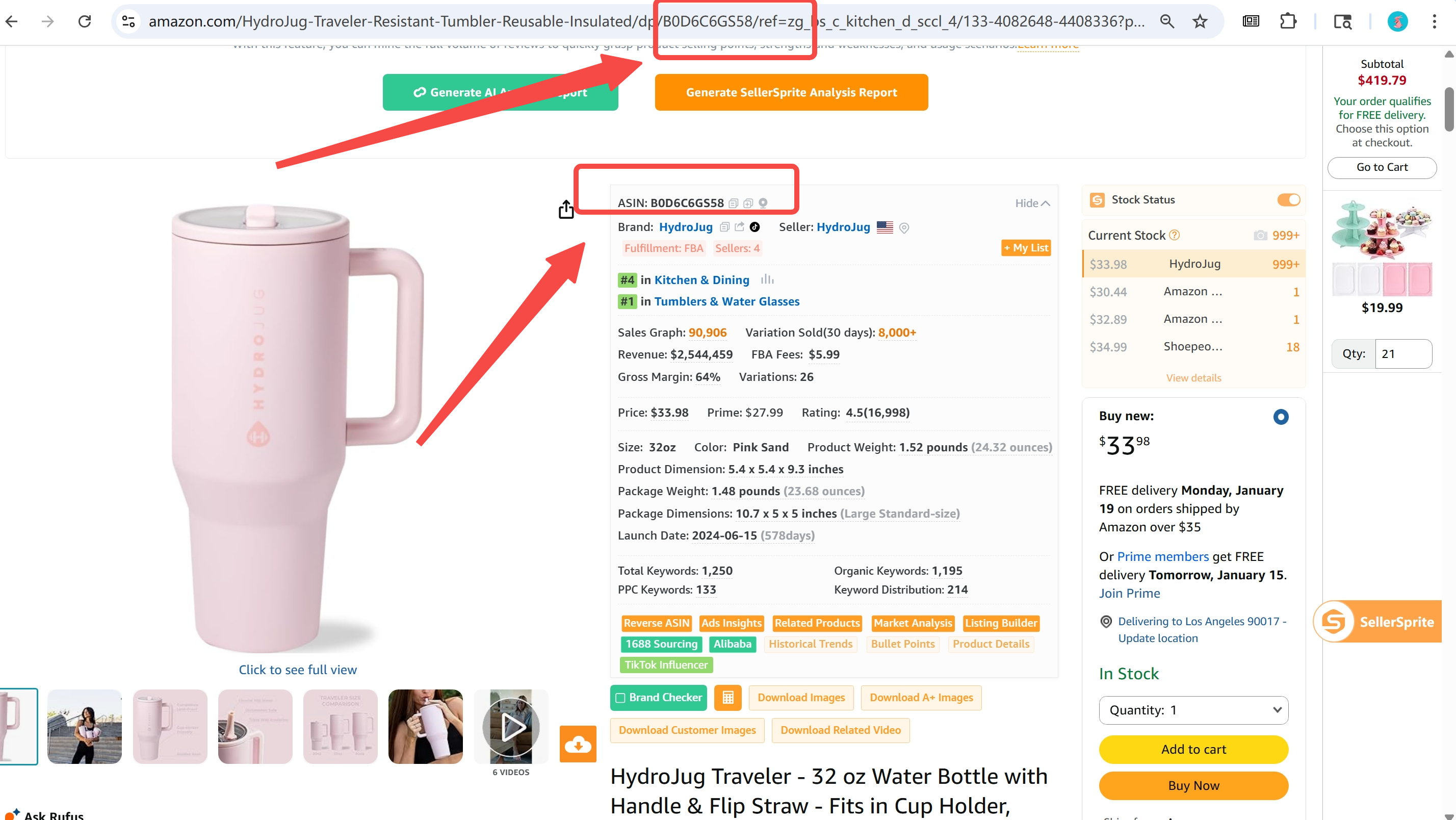
- What is an ASIN on Amazon
- ASIN Lifecycle From Creation to Ranking
- How ASINs Work in Amazon Search
- Parent and Child ASINs Explained
- Amazon Listing Optimization Core Elements
- Amazon Title Optimization Best Practices
- Bullet Point Benefits That Convert
- Product Description and A Plus Content
- US and EU ASIN Rules and Differences
- Using SellerSprite Tools for Scalable Optimization
- Frequently Asked Questions
What is an ASIN on Amazon
An ASIN or Amazon Standard Identification Number is a unique ten character identifier that Amazon assigns to every product in its catalog. ASINs allow Amazon to organize billions of products and help buyers quickly find exactly what they are looking for.
For sellers, the ASIN is more than an ID. It is the core unit that Amazon uses to track keyword relevance, sales history, reviews, pricing, and performance signals. All listing optimization efforts ultimately influence how an ASIN performs.
| Aspect | Details |
|---|---|
| Length | Ten characters |
| Scope | Unique per product per marketplace |
| Usage | Search indexing, catalog management, advertising |
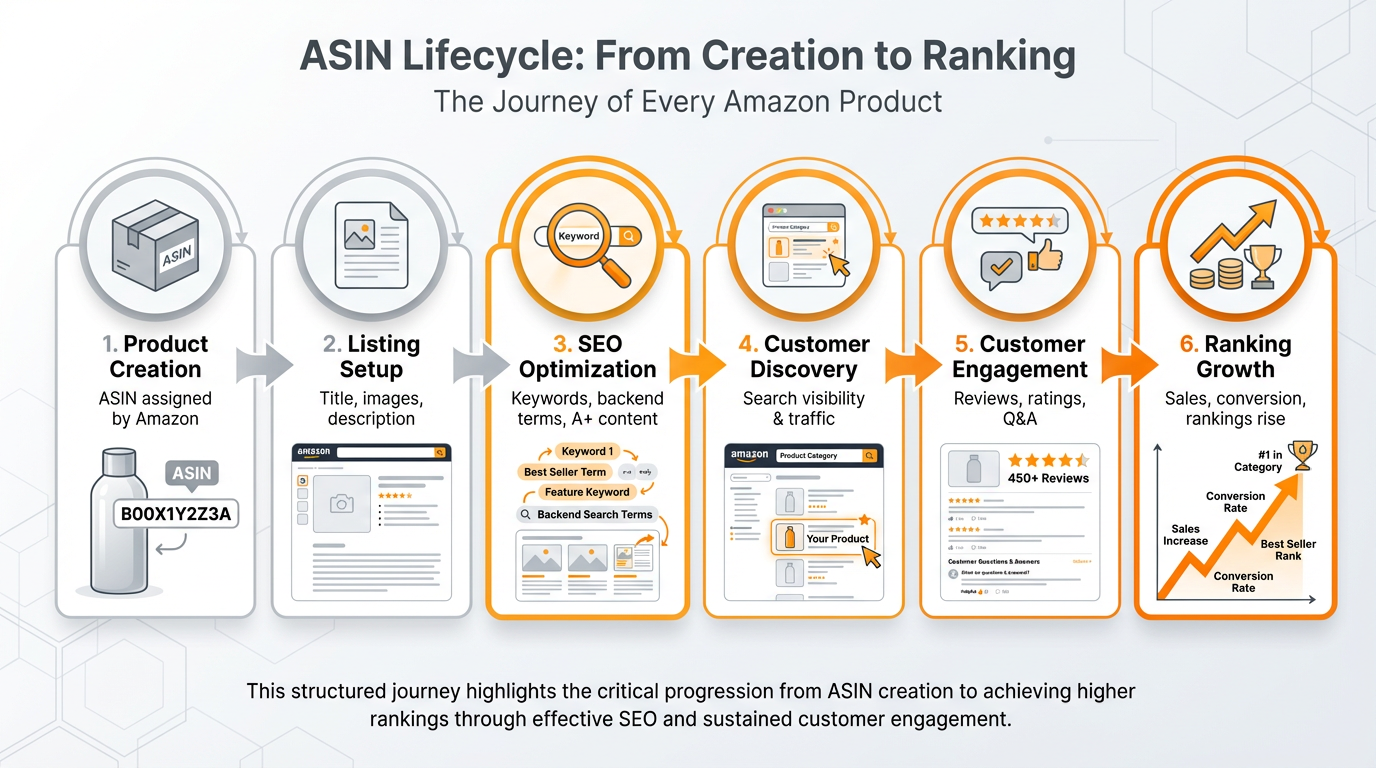
ASIN Lifecycle From Creation to Ranking
Every ASIN goes through a lifecycle. Understanding this lifecycle helps you prioritize the right optimization actions at the right time.
- ASIN creation through Amazon catalog or new product listing
- Initial indexing for keywords based on title, bullets, and backend fields
- Performance testing phase driven by early clicks and conversions
- Stabilization where sales history and reviews influence ranking
- Growth or decline depending on ongoing optimization and competition
How ASINs Work in Amazon Search
Amazon search evaluates relevance and performance at the ASIN level. The A10 algorithm considers keyword relevance, historical sales, conversion rate, review quality, and customer behavior.
SellerSprite has analyzed more than 10000 ASINs across multiple categories. The data shows that listings with clearly structured titles and benefit driven bullets consistently outperform those with keyword stuffing or unclear messaging. On average, ASINs with optimized titles ranked approximately 40 percent higher for their primary keyword.
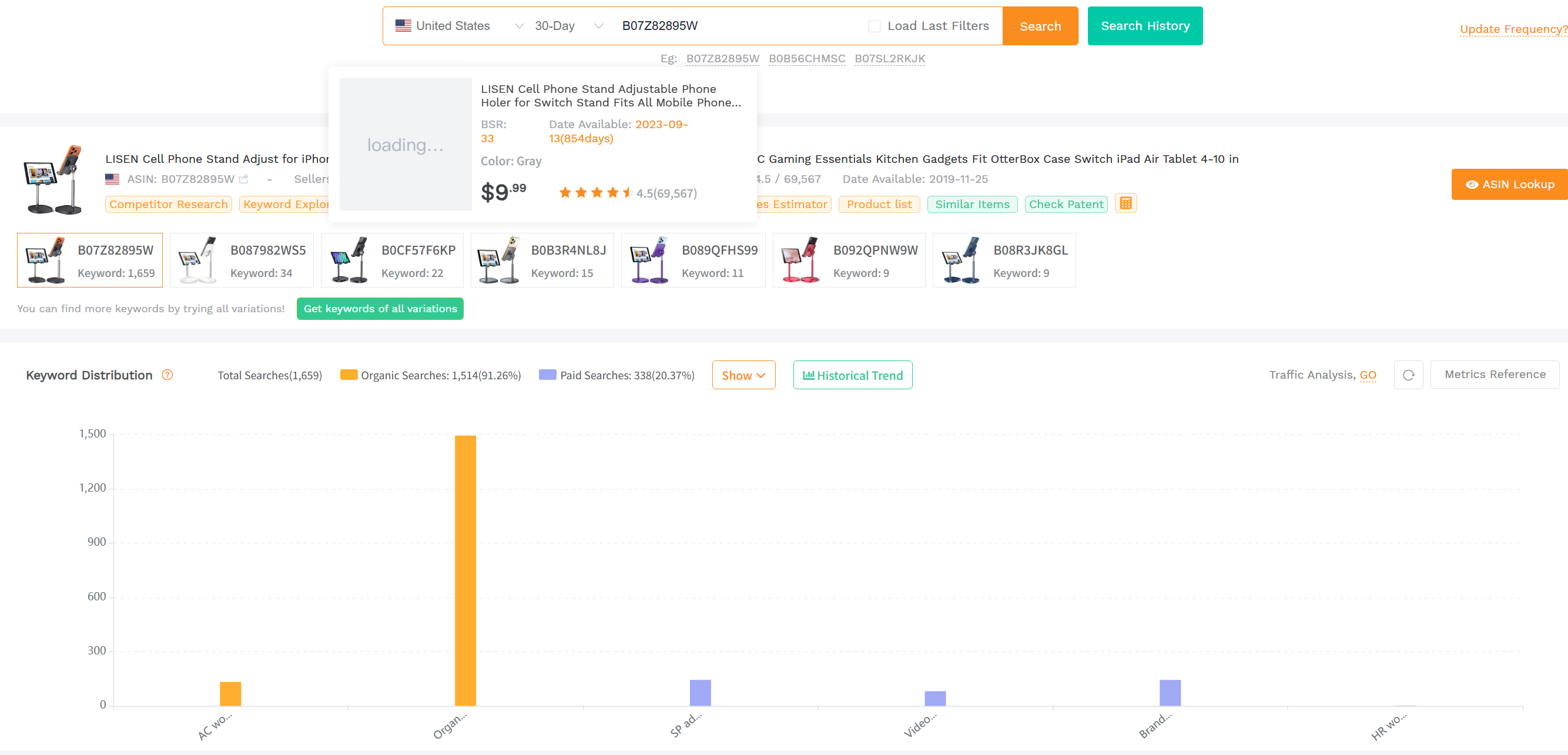
Tools like Reverse ASIN allow sellers to understand which keywords Amazon already associates with competing ASINs, making optimization more precise and less speculative.
Parent and Child ASINs Explained
Variations are managed through parent and child ASIN relationships. This structure helps Amazon group similar products while giving customers clear choices.
| Type | Function | Impact on SEO |
|---|---|---|
| Parent ASIN | Groups variations | No direct ranking |
| Child ASIN | Actual purchasable item | Ranks independently |
Amazon Listing Optimization Core Elements
Amazon listing optimization focuses on aligning your content with customer intent and Amazon ranking signals. Each element supports both discoverability and conversion.
- Keyword focused title for relevance and clicks
- Bullet points that address benefits and objections
- Description or A Plus content for brand storytelling
- High quality images that follow Amazon guidelines
- Backend attributes and search terms for indexing
Amazon Title Optimization Best Practices
The title is the strongest on page relevance signal. It is also the first element shoppers see in search results.
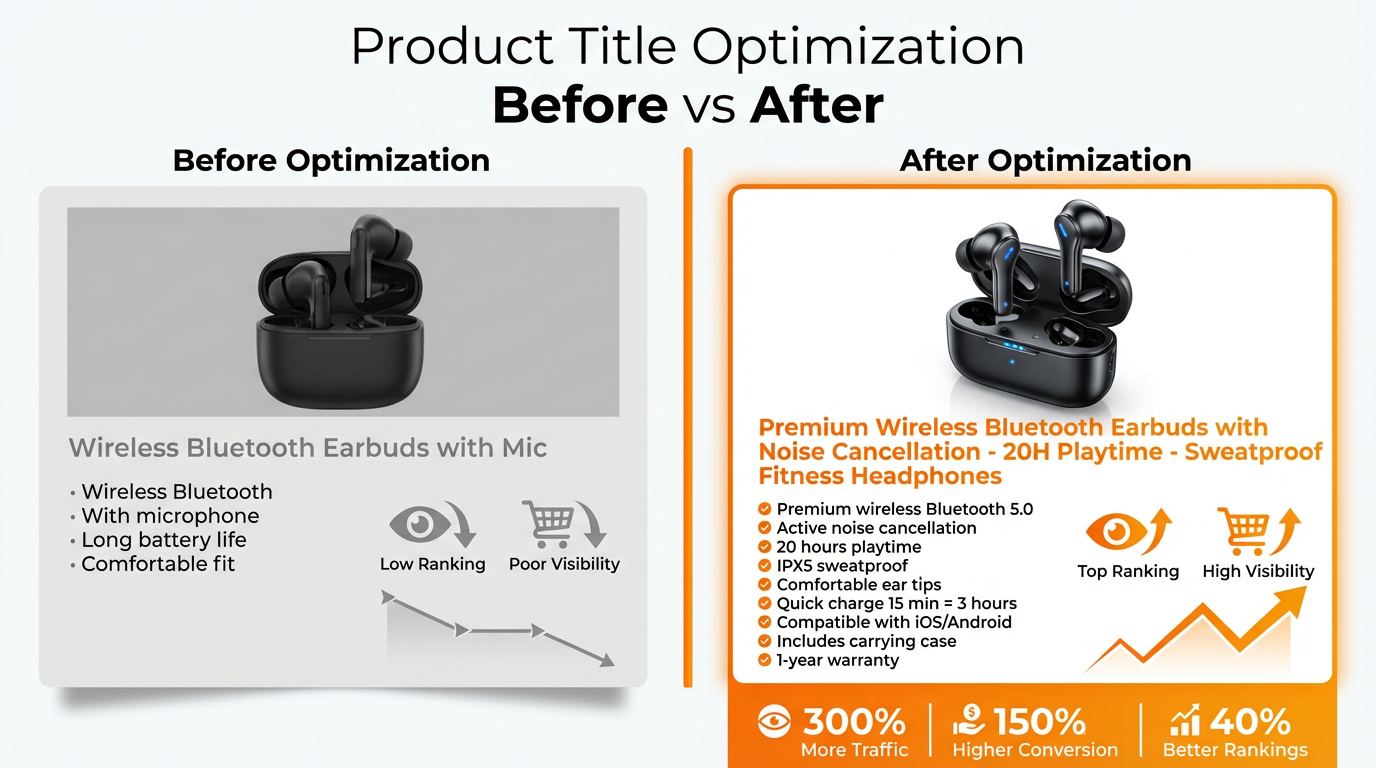
Best practice titles balance keyword relevance and readability. Use SellerSprite Keyword Mining to identify the primary keyword and place it early in the title.
- Lead with the main keyword
- Follow category specific length limits
- Add one or two differentiators
- Avoid unnecessary symbols or repetition
Bullet Point Benefits That Convert
Bullet points influence conversion more than ranking, but conversion directly affects ranking over time. Effective bullets reduce hesitation and answer common questions.
SellerSprite Review Analysis highlights recurring negative themes in competitor reviews. Addressing these points directly in bullets can significantly improve trust.
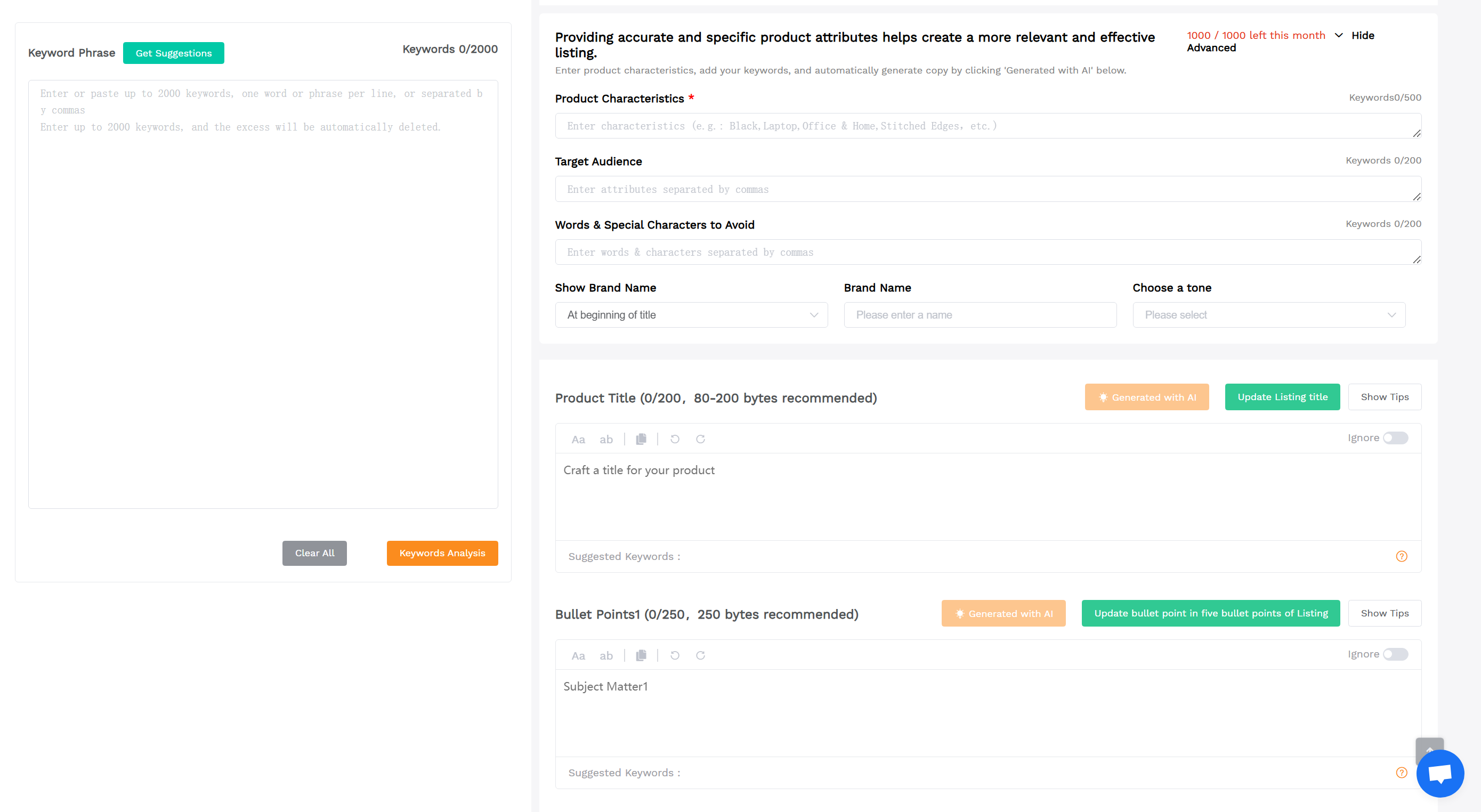
- Start with a clear benefit headline
- Explain how the feature delivers that benefit
- Reinforce with proof or specification
Product Description and A Plus Content
Product descriptions and A Plus content build emotional connection and brand credibility. While they carry less direct SEO weight, they improve time on page and conversion rate.
Use descriptions to tell a clear story about who the product is for and why it exists. Use A Plus modules to visually reinforce key selling points.
US and EU ASIN Rules and Differences
ASINs can exist across marketplaces, but optimization rules differ by region.
| Marketplace | Optimization focus |
|---|---|
| United States | Keyword relevance and brand registry |
| European Union | Localization, compliance, and attributes |
Using SellerSprite Tools for Scalable Optimization
SellerSprite tools turn listing optimization theory into repeatable workflows.
- Reverse ASIN for competitor keyword discovery
- Keyword Mining for long tail opportunities
- Listing Builder for structured titles and bullets
- Review Analysis to uncover conversion blockers
Share Your Sourcing Journey With SellerSprite Community
Join the SellerSprite community on the Facebook Group to share your sourcing journey, ask questions, and get support from fellow Amazon sellers.
Frequently Asked Questions
How do I find an ASIN?
The ASIN appears in the product URL and in the product details section of the listing.
Can multiple sellers use the same ASIN?
Yes. If the product is identical, multiple sellers can offer it under the same ASIN.
Does editing a listing create a new ASIN?
No. Editing content updates the existing ASIN unless a completely new product is created.
Are ASINs shared across marketplaces?
An ASIN can exist in different marketplaces, but content and compliance rules vary.
Key Takeaways
- ASINs are the foundation of Amazon catalog and search
- Listing optimization affects both ranking and conversion
- Data driven tools reduce guesswork
- Marketplace rules matter for global sellers
View The SellerSprite Course Directory
Ready for the next step? Open the SellerSprite Academy course directory to continue building your Amazon FBA skills chapter by chapter.
References
About the Author
SellerSprite Team
The SellerSprite Team works directly with thousands of Amazon sellers worldwide. The team has analyzed more than 10000 ASINs across US and EU marketplaces, providing hands on guidance on listing optimization, keyword strategy, and conversion improvement using SellerSprite tools.